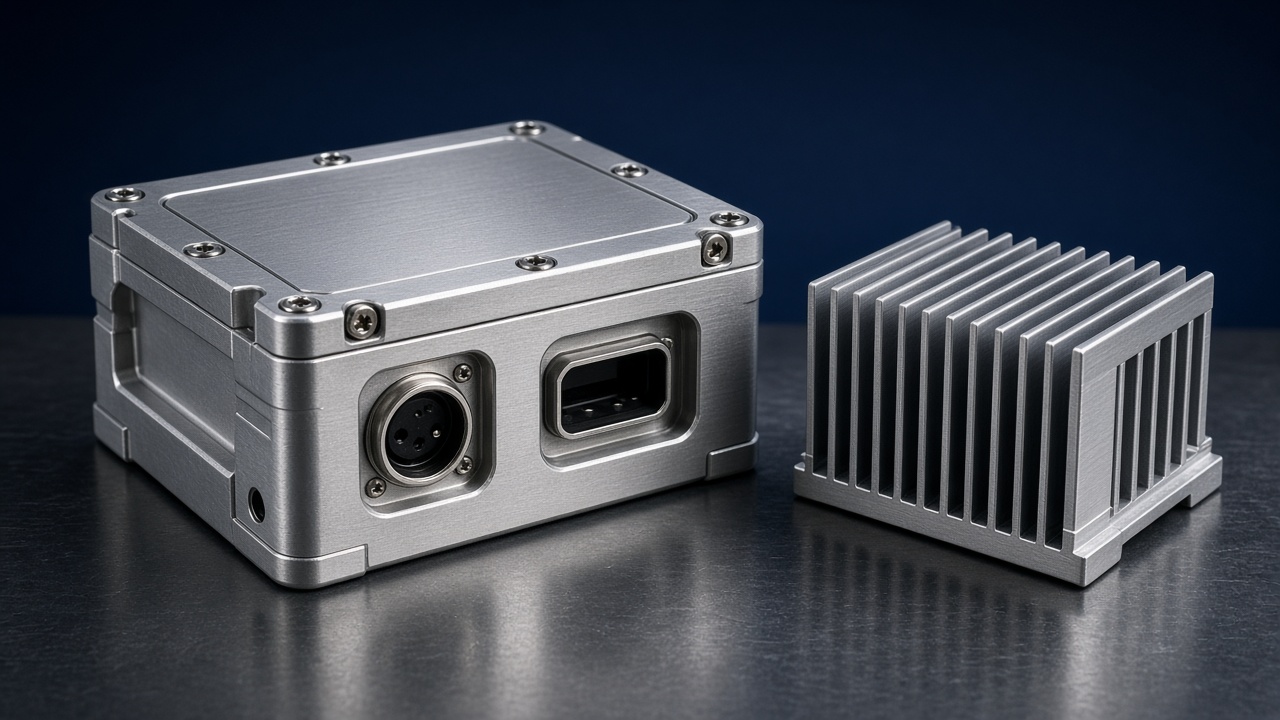
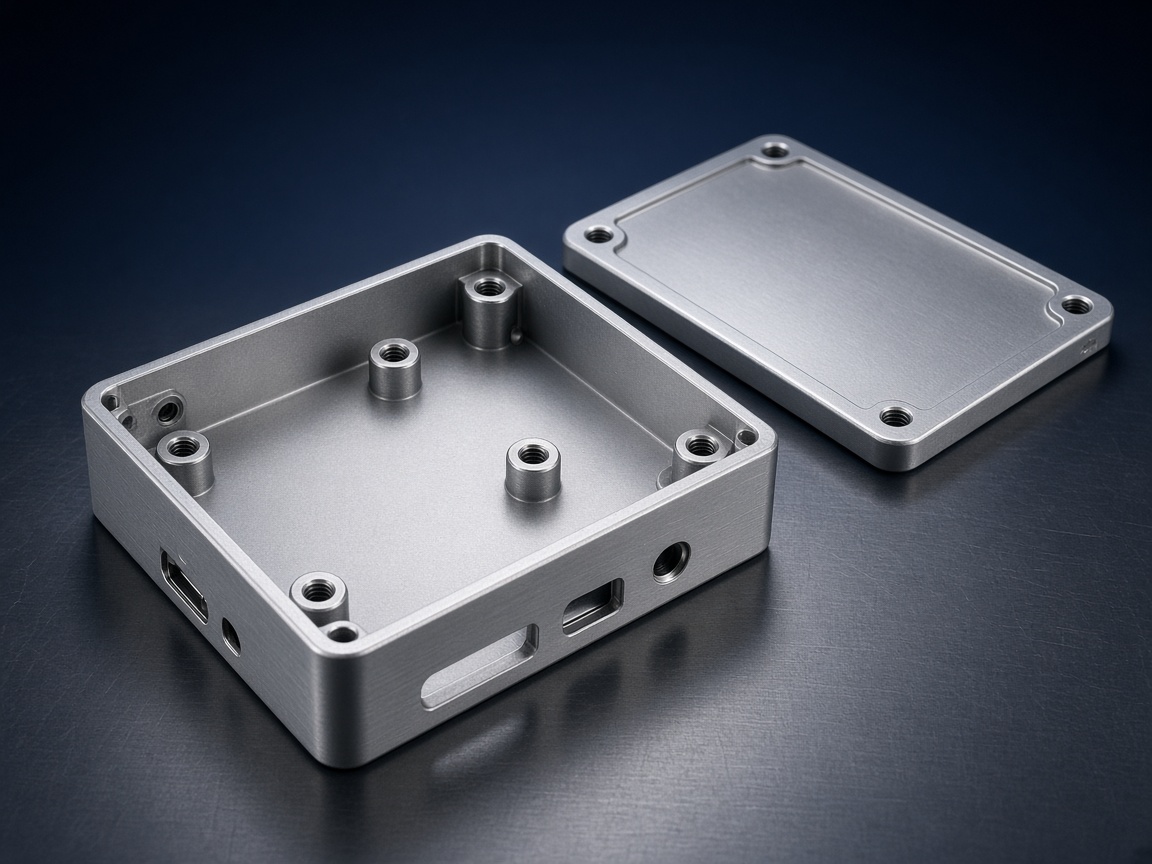
Housings and lids
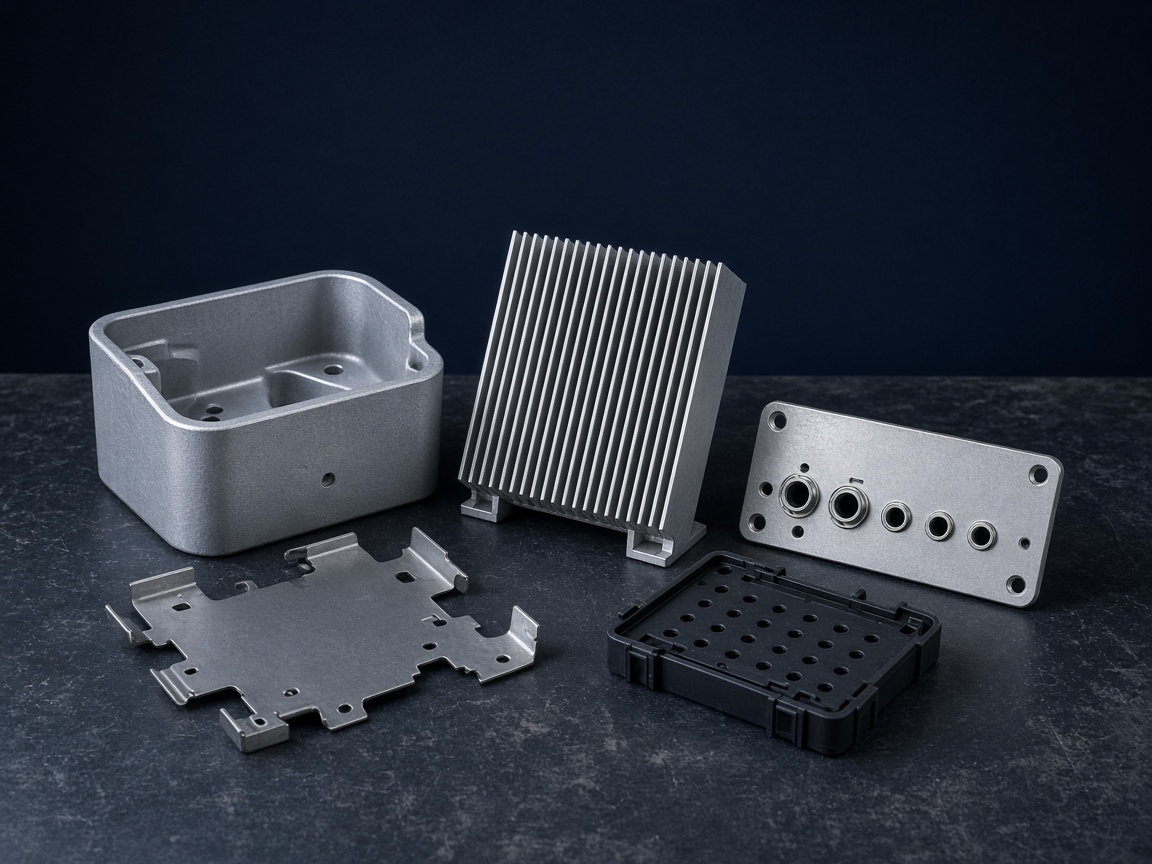
Pocketed boxes, sensor covers, and instrument lids. CNC aluminum when the wall is real. Sheet metal when a brake and a gasket groove will do. Cosmetic faces stay marked.
Bosses, connector cutouts, datum pads.

Industries
Sector is a folder name. The drawing is the contract. Bluesky Tooling cuts electronics-adjacent work we can actually hold — housings, heat sinks, connector plates, shields, and molded insulators. We mill, stamp, or mold from the geometry. We do not hang a UL, FCC, or CE plaque we did not earn, and we will not call a metal box a certified Faraday cage. Uploads stay on this server.
A union of the work that shows up in the inbox — not a catalog of wafers, chip testers, or finished consumer devices we have never assembled. If the print is a listed enclosure with a named safety file, say so; we will tell you when that is not our cell.
Pocketed boxes, sensor covers, and instrument lids. CNC aluminum when the wall is real. Sheet metal when a brake and a gasket groove will do. Cosmetic faces stay marked.
Bosses, connector cutouts, datum pads.
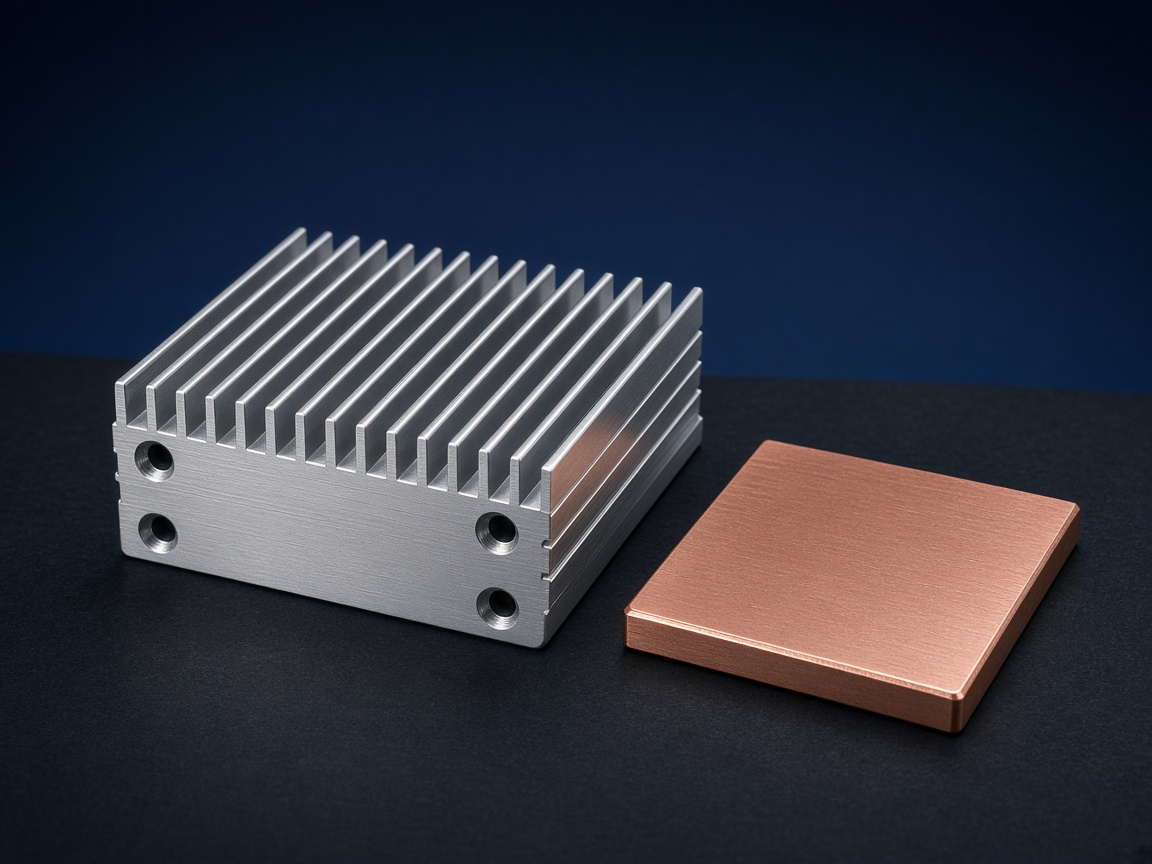
Milled fins when the count is low or the pocket is custom. Extrude-and-cut when a profile already exists — we will say which is cheaper. Copper only if you write it. Aluminum machining →
Flat-to-die faces. Fin pitch you ballooned.
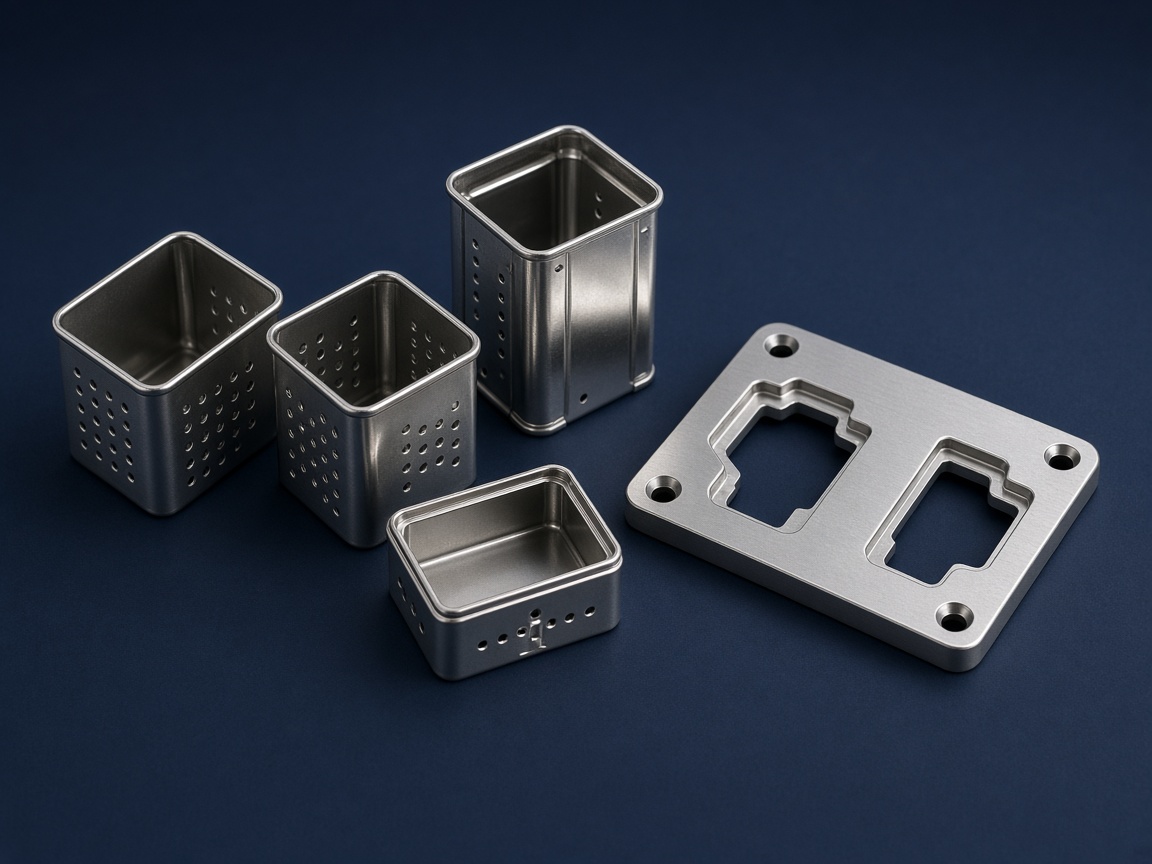
D-cut plates, I/O panels, and stamped cans. We cut the metal. Isolation, creepage, and EMI talk stay on your spec — we will not invent a shield rating from a photo.
Connector hardware. Thin-can stamp when the yearly number is honest.
PTFE / PC / ABS bits, rack-adjacent plates, and fixtures that hold a board while you debug. We will not call a nest a listed enclosure, or a plastic lid a dielectric certificate.
CNC plastic while CAD moves. A tool only when the list is frozen. PTFE, PC, POM as printed. Plastic CNC →
Laser-plus-form 5052, or a milled 6061 plate when the pocket is real. Hardware rules before a powder coat.
Pin nests, press plates, and programming jigs. The nest is sometimes the product. Repeat the datum.
Small housings and heat-path lids for a bench build. We do not certify a radio or a listed product.
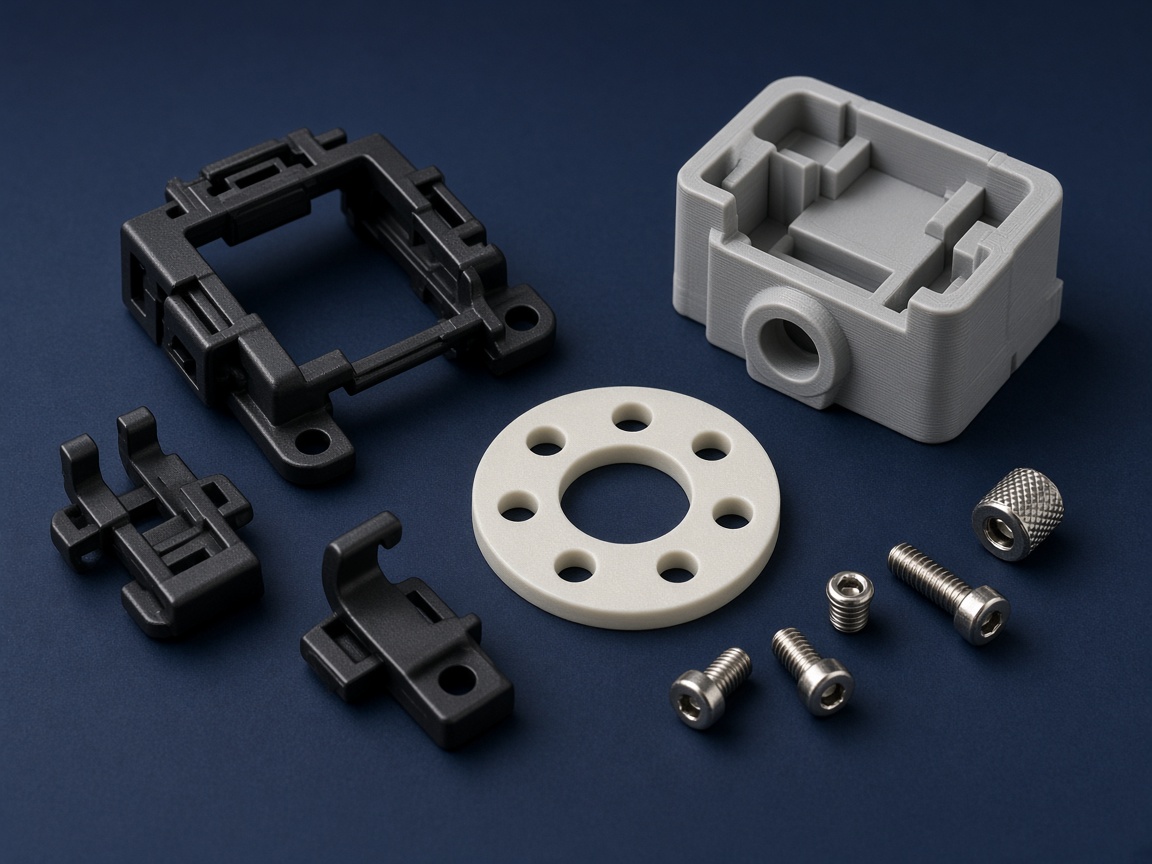
One geometry, three honest routes. We will not mill a clip that wants a mold, or hog a heat-sink blank that wants an extrusion.
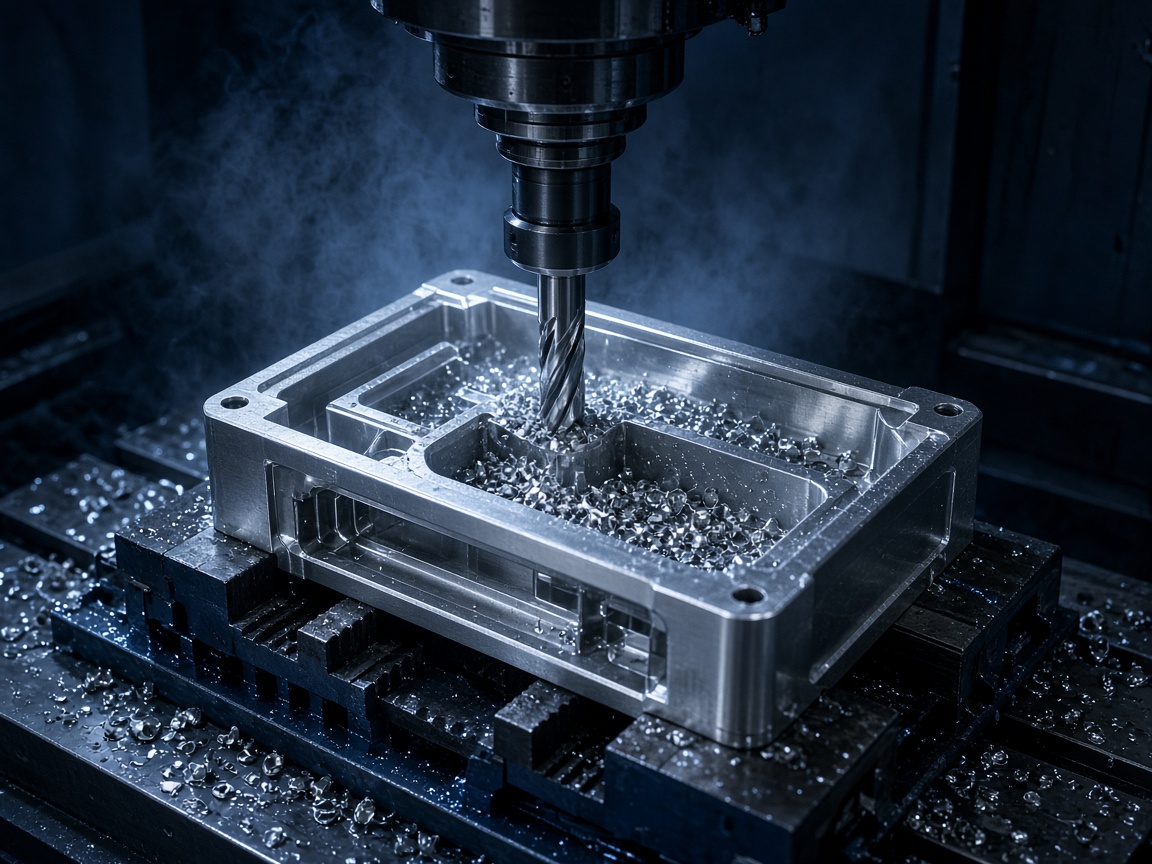
Prismatic housings, sinks, and connector plates. 3-axis first; 4-axis or 5-axis only when a second clamp would stack error. CNC machining →
Named grades. Balloons you buy.
Laser-plus-form for short lots. A compound die when the yearly can count is honest. Stamping → · Sheet metal →
5052, stainless, mild as written.
T1 shots vs a locked tool. CNC plastic while the bezel still changes. Injection molding →
ABS, PC, PA, POM — as printed.
These are desk numbers — not a claim of ±0.001 in on every edge of a large plate. The print wins.
| Mill / turn cells | 3-axis, 4-axis, 3+2, continuous 5-axis, lathe. See CNC machining. |
|---|---|
| Linear talk | ±0.05 mm general on milled faces; tighter when ballooned and purchased. |
| As-machined | Typically Ra 3.2 μm unless a cosmetic or thermal face is marked. |
| Wall talk | About 0.8 mm metals / 1.5 mm plastics when geometry allows — not a 200 mm tall rib. |
| Fin talk | Milled fins are a feed conversation. Deep, thin fins chatter; we will say so. |
| Sheet / stamp | Short lots laser-plus-form. Die work when the yearly number is real. |
| Work envelope | Standard mills cover most housings and plates (about 800 × 500 × 400 mm). Larger asked on the quote. |
| Files | STEP, IGES, SLDPRT, DXF, PDF — disk only. Never emailed. |
Prototype, EVT-style lots, and low-to-mid production. We do not advertise a consumer-electronics press line we do not own.
| What it means here | Honest pick | |
|---|---|---|
| One-off / proto | Fit, DFM, and a first box. | CNC mill / turn, or CNC plastic. 3D print only if the PDF allows it. |
| EVT-style lots | A handful that must repeat the datum and the cutout. | Same cell as proto. Do not freeze a steel tool on week two. |
| DVT / appearance | Finish and fit on the faces you marked. | Named coat. Molded look only if a tool or a cast stand-in is bought. |
| Pilot / bridge | Cover a build while a serial source is still open. | CNC, soft tool, or a short stamp. We will say which is cheaper. |
| Low–mid production | Repeatable lots when the process matches the count. | Harder tool or a mill cell — not a slogan of “1M units.” |
“Electronics grade” is not a spec. Write the alloy and the temper. We will not silently swap 6061 for copper, or ABS for PC, because a catalog called them cousins.
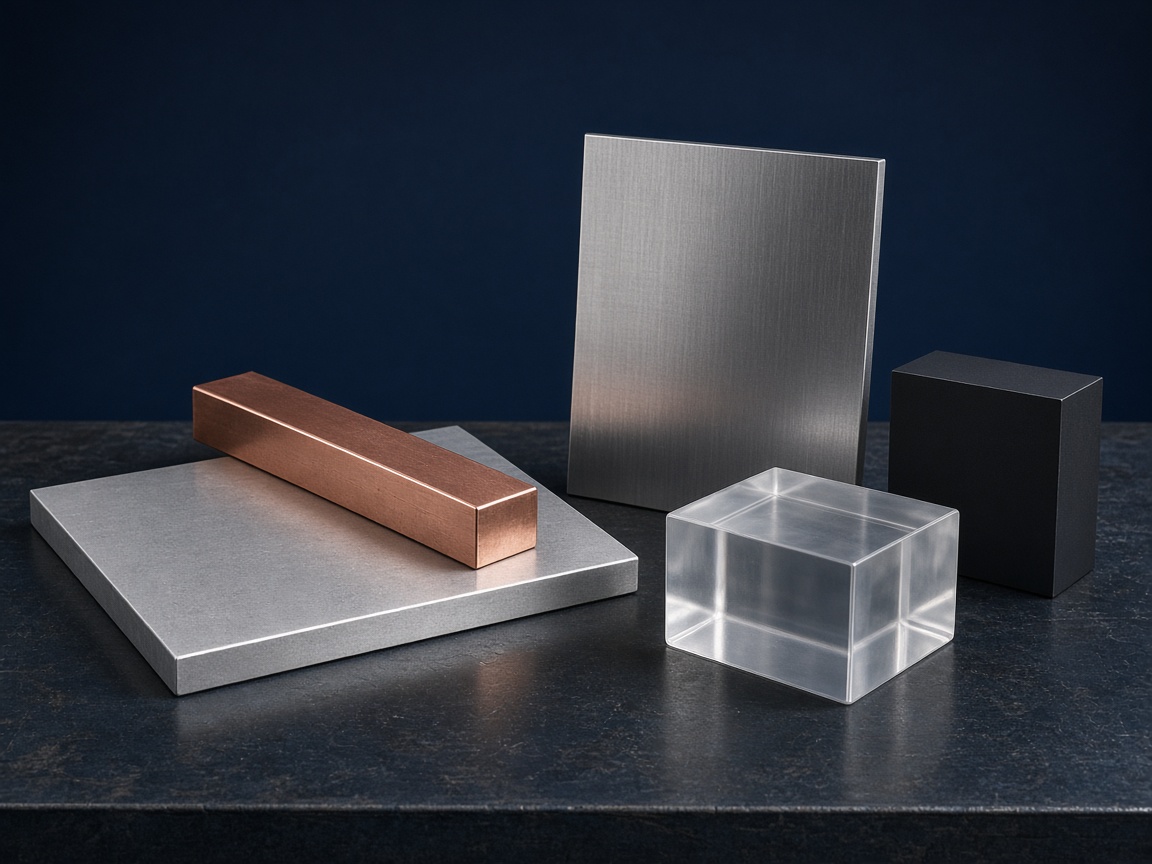
Unmarked faces stay functional. Film is thickness. A coat after a thermal face is a different conversation than a cosmetic lid.
Default. Tool marks stay. Typical Ra 3.2 μm talk.
Even matte before anodize, or as a look of its own.
Aluminum Type II / III. Dye is a range, not a Pantone. Mask thermal pads if you need metal-to-metal. Anodizing →
When you write it — often the honest pick under a paint or for conductivity.
After hardware rules are clear. Mask the fits. Thickness is a number.
Stainless as named. Mild protection, not theater. Passivation →
We will say this on the quote if the solid hides it. Cheaper now than after a heat-sink blank is hogged.
A cutter has a radius. Sharp internal corners on a housing are an EDM conversation or a relief.
Past about 4× width we talk a longer tool, a split, or a thicker rib. Copying an extrusion onto a mill solid chatters.
A bent 5052 chassis is not a pocketed 6061 box. Do not send a mill solid if a blank-and-form would do — or the reverse.
Write the flatness if a die or a pad must sit. Anodize on that face is a different hole and a different heat path.
A “Faraday-ish” box needs marked seams, gasket grooves, and contact faces. We will not invent a shield rating.
Show faces marked. A bezel that “looks consumer” without a texture call is a guess we will not make.
We work to the balloons you bought. We do not advertise UL, FCC, CE, RoHS as our factory cert, or a listed-enclosure file we did not run. If you need a named QMS, ask on the quote — we will say yes or no.
| Inspection | The features you ballooned. Visual plus the gauges the print implies. |
|---|---|
| CMM / FAIR | Line items. Not a default on a ten-piece housing. |
| Material cert / CoC | On request when we can buy the lot that way. |
| UL / FCC / CE / RoHS | Not a claim on this desk. Those files live with the product owner. We cut the metal. |
| EMI / thermal | Your spec. We hold the geometry you ballooned. |
| Files | Disk only. Staff inbox. Never SMTP. |
Programs, not badges. We will not list OEM marks we do not own.
Sensor boxes, heat-path lids, and small chassis for a bench or a short lot. Functional metal — not a listed radio.
Connector plates, stamped cans, and panel cutouts. EMI stays on your drawing.
Board nests, press plates, and short-run replacements while a serial tool is still open. The print still wins.
No account. Files stay on this server and open only in the staff inbox.
Upload the pack on Get a Quote. Nothing is mailed.
After you confirm, the cell or the tool starts. We will say if stamp or mold is cheaper than mill.
Inspected to the balloons you bought, packed to the quote address.
Sector is a folder name. The drawing is the contract. We will not invent a UL file or an FCC grant.
Mill, stamp, or mold — picked from the geometry and the yearly number. Linked desks, not a thin clone.
STEP and PDF land in uploads/quotes. Staff only. Never SMTP.
A sink belongs on a mill or an extrusion. A can belongs in a stamp. A dozen lids stay CNC plastic.
STEP plus a PDF. Name the grade, the qty, and the balloons. Files stay on the Bluesky Tooling server and open only in the staff inbox.