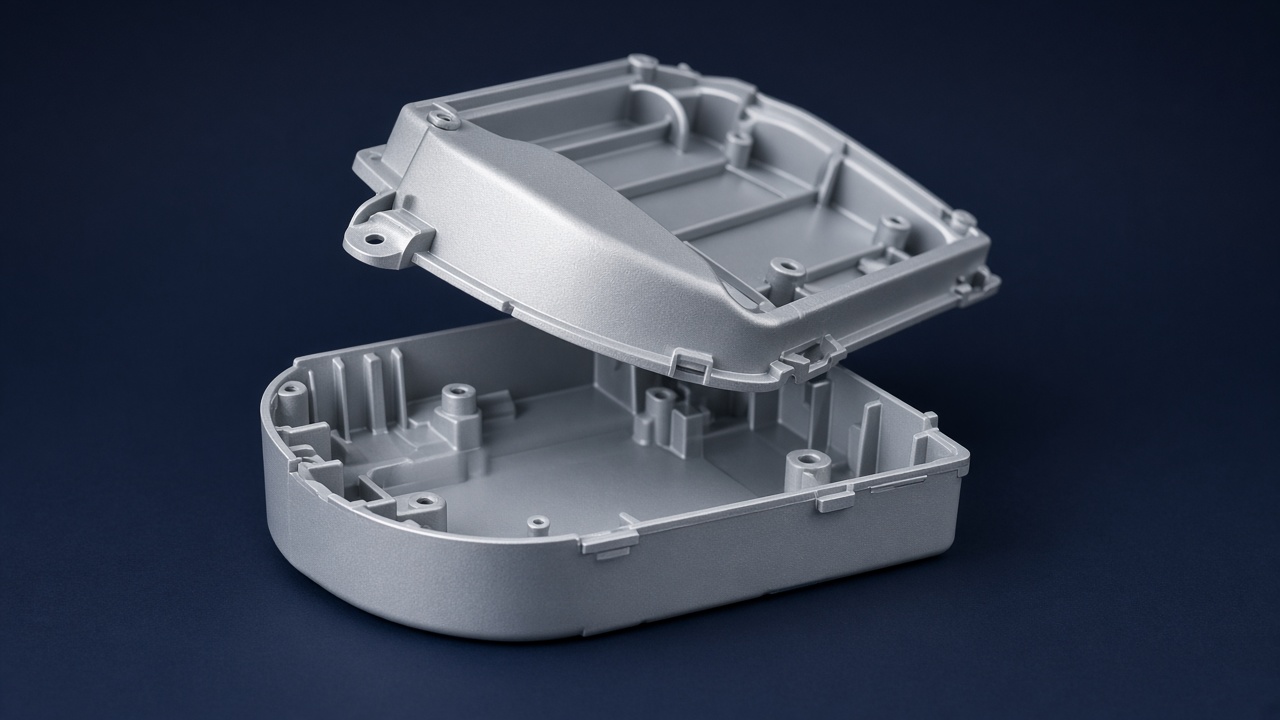
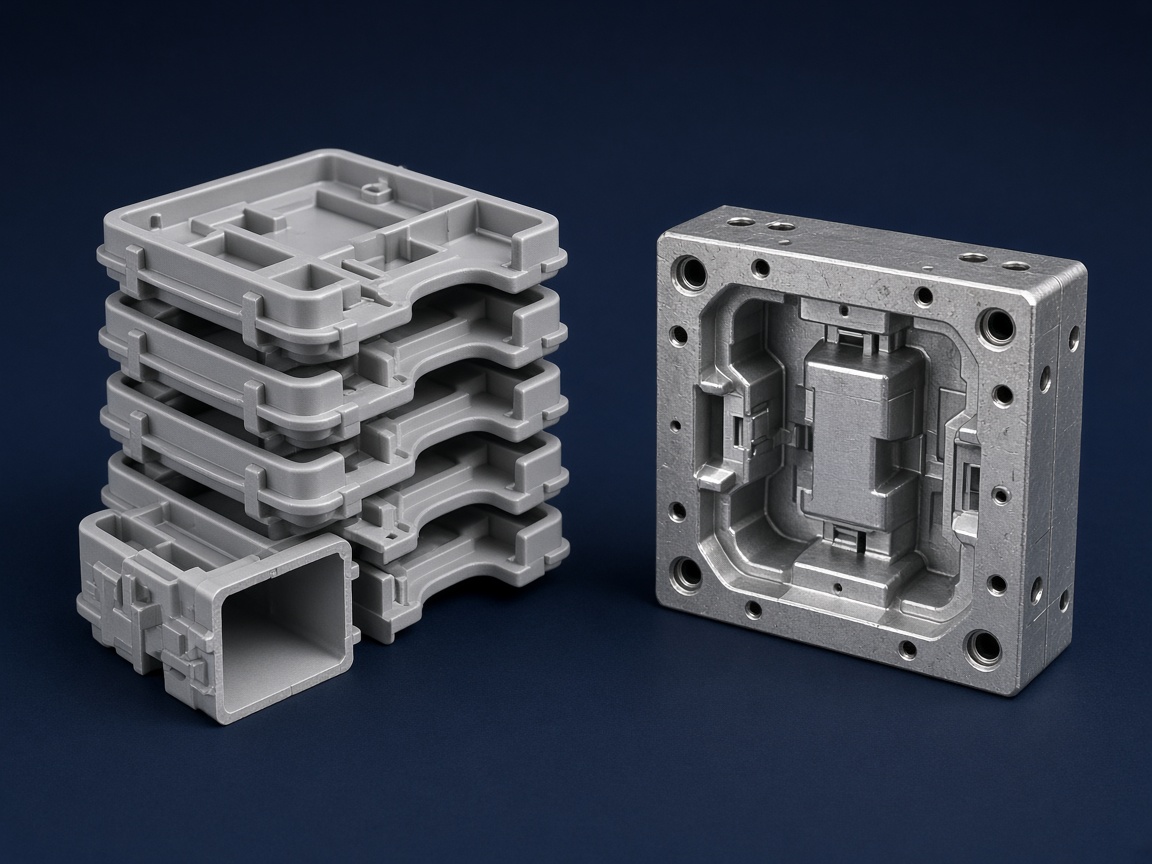
T1 shots + list
Steel or aluminum is cut. Parts come out. You get a dimension list and a photo pack. Budget a review. A CAD change after T1 is a cavity edit — priced, not shrugged.
First honest look. Not a lock. See also what T1 means.

Capabilities
Melt, fill, pack, cool, eject. Bluesky Tooling cuts a tool when the geometry is ready to shoot — not when a CAD still moves every week. T1 means shots exist and a list is open. Production means that list is frozen. Aluminum or steel is a volume call. Uploads stay on this server.
Same resin. Two different jobs. T1 proves the cavity. Production repeats the frozen list. We will not treat first shots as a finished product.
Steel or aluminum is cut. Parts come out. You get a dimension list and a photo pack. Budget a review. A CAD change after T1 is a cavity edit — priced, not shrugged.
First honest look. Not a lock. See also what T1 means.
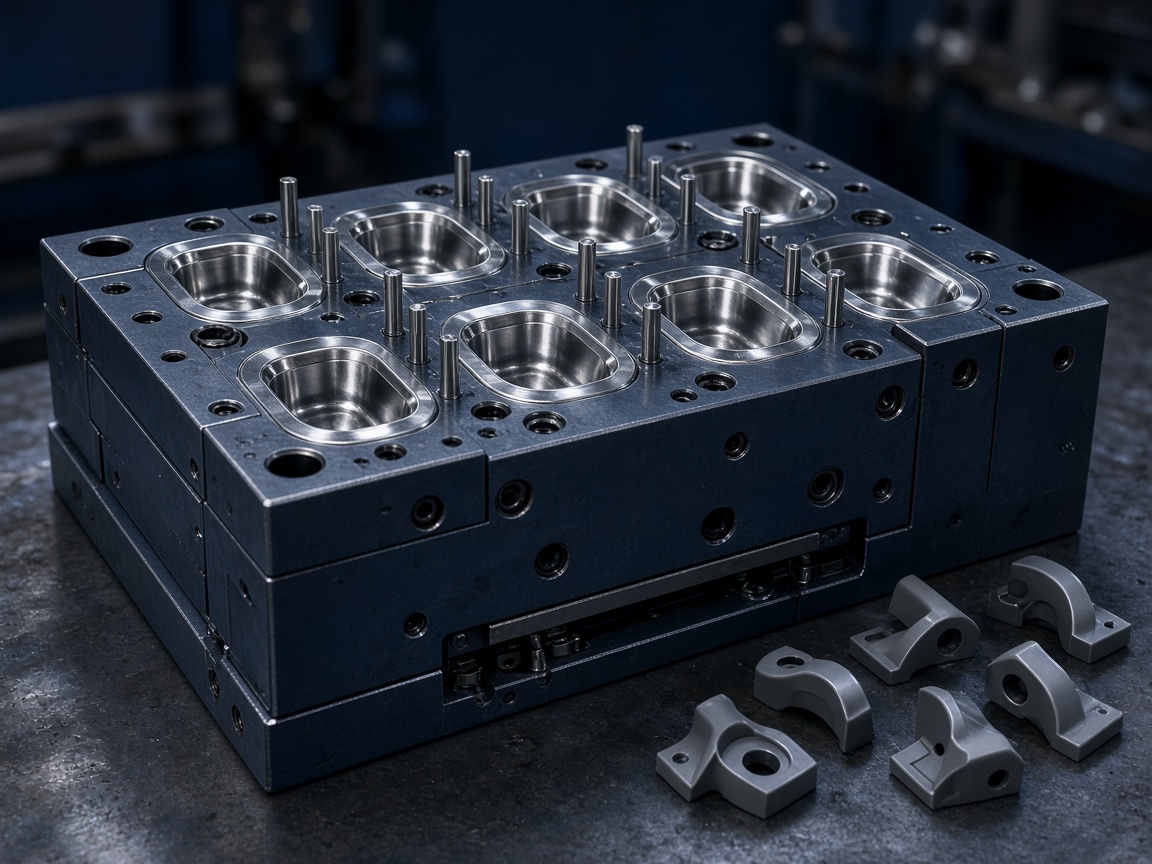
You sign the list. We run against it. Color, resin lot, and SPI faces stay as written. Steel edits after lock are a new line — not “a small tweak.”
Yearly number sized the tool. See production tooling.
One cavity so you can hold resin parts before a family or multi-cavity spend. Faster steel talk. Shorter life. Honest when the shape will still move.
Bridge tool when you need shots, not a 100k-cycle die. Rapid tooling →
Pick from the yearly number and how often the cavity will change. Soft metal is faster. Hard steel lasts. We will not sell P20 for twenty pieces as theater.
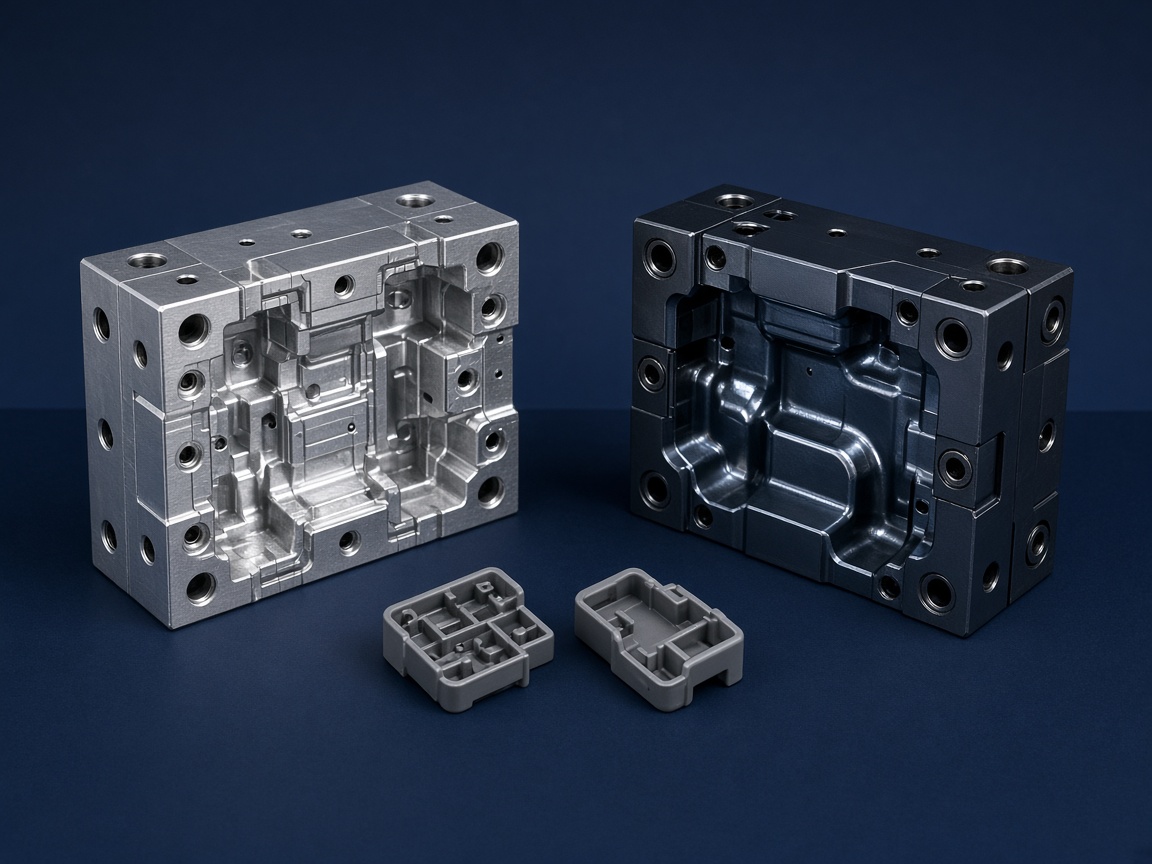
Faster cut. Easier steel-safe edits after T1. Fine for hundreds to a few thousand shots when the resin is not abrasive and the geometry is still learning.
First pick for a changing housing or a pilot lot.
P20, H13, S136-class talk when you write wear, polish, or glass fill. Harder to recut. Quoted with a cycle band, not “forever.”
Honest when the yearly number pays for the hardness.
A second cavity is a second steel bill. Family tools only when the parts ship together and shrink the same. We will not pack unrelated parts into one shoe to look cheap.
Single cavity until the number is real.
Print wins. These are shop-talk numbers — not a brochure claim of ±0.05 mm on every clip.
| What we cut | Single-cavity proto, bridge aluminum, production steel. Multi-cavity when the yearly number pays. |
|---|---|
| T1 | Shots + list. Geometry is not frozen until you lock. Steel edits are line items. |
| Resins we talk | ABS, PC, PC/ABS, PA (nylon, GF if written), POM / acetal, PP, HDPE, TPU / TPE. PEEK and other high-temp named when the print is real. |
| Volume talk | Tens to low thousands on a soft tool. Tens of thousands and up on steel. CNC or print until the tool pays. |
| Wall talk | Keep walls even. Thick bosses sink. Ribs, not bricks. We mark sink and warp risk on the quote. |
| Draft | Write it. Texture wants more. Zero-draft show faces are a polish and eject conversation. |
| Cosmetic | SPI-style faces called on the cavity. Unmarked stay as-machined. |
| Secondary | Threaded inserts, laser mark, pad print, simple assembly — written, not assumed. Soft second shot is overmolding. |
| Files | STEP + PDF — disk only |
A tool is a capital line. We will say CNC or print if the yearly number cannot pay for steel.
Ten to fifty parts that still move. Machine the resin or print a shape. See plastic CNC and 3D printing.
Hundreds to a few thousand. Single-cavity aluminum or a short-life steel insert. You hold real resin before a multi-cavity spend.
Tens of thousands and up. Harder steel, more cavities if the math holds. Cycle band on the quote — not “unlimited life.”
Grip, seal, or two-color. That is a second tool or a two-shot cell. Mention it here; price it on overmolding.
No account. Files stay on this server and open only in the staff inbox.
Upload the pack on Get a Quote. Nothing is mailed. Resin, qty, yearly number, and cosmetic faces on the PDF.
After you confirm. We will say if CNC, a soft tool, or production steel is the honest pick.
Review the shots and the list. Lock, then we run. Packed to the quote address.
We will not call first shots a finished product. Steel changes are priced. See the T1 note.
If twenty pieces are cheaper as CNC, the quote says machine. A new die is never “included.”
ABS is not PC. PA+GF is not “nylon-ish.” Color and fill stay on the PDF.
STEP and PDF land in uploads/quotes. Staff only. Never SMTP.
Name the grade and the fill. Mystery “engineering plastic” gets a question, not a silent swap. Glass and flame class change the tool and the sink talk.
*PEEK and other high-temp resins when the print is real — not a default swap for ABS.
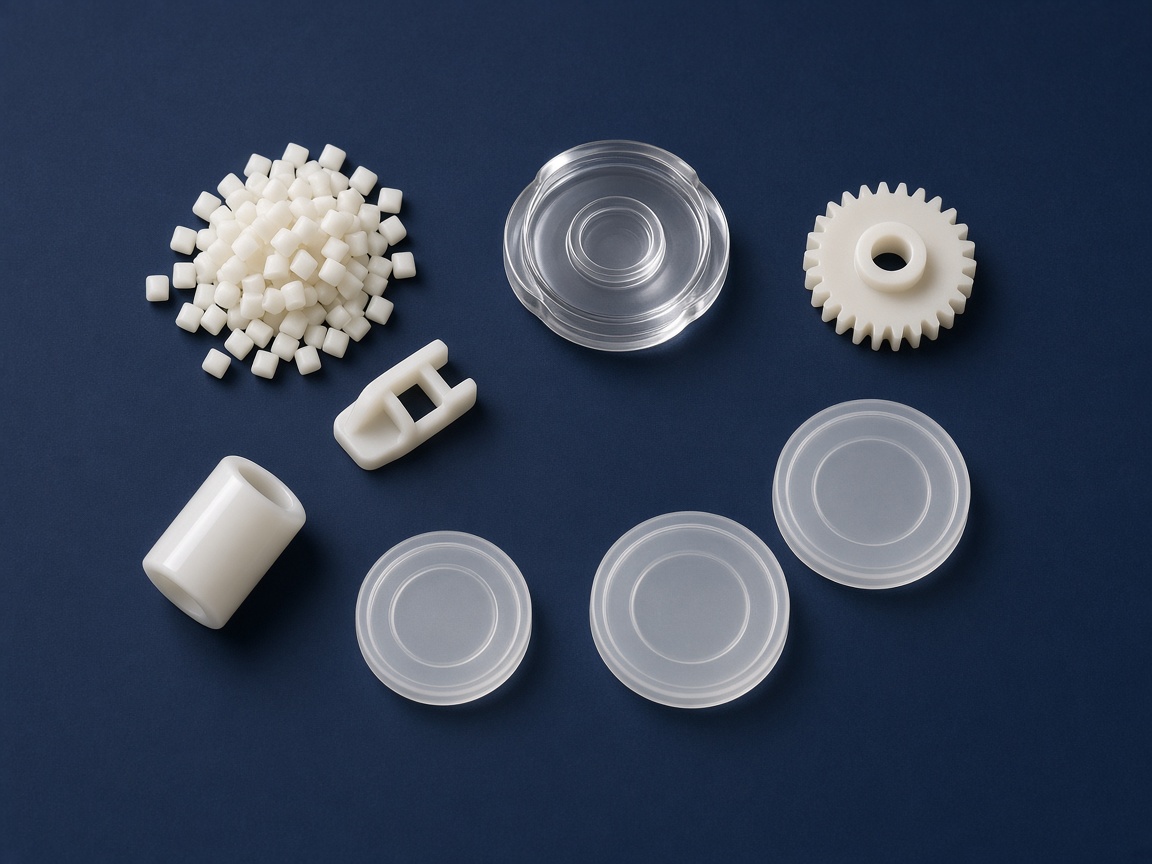
The cavity makes the shape. Hardware and polish are extra lines. Soft-over-hard is a different cell.
Heat-set or molded-in. Write metric or UN and the boss. A thin wall will not hold a brass insert — we will say so.
Call A / B / C / D on the show faces. Unmarked stay as-machined. Diamond polish is a steel and draft conversation, not a free gloss on the whole part.
A named grain if you have one. Texture wants draft. We will not guess a Mold-Tech number from a phone photo.
Laser, pad print, and a simple stack when written. Not a free kitting desk.
TPU over PC, or a metal insert in the first shot. Bond and flash are balloons. Price that pack on overmolding.
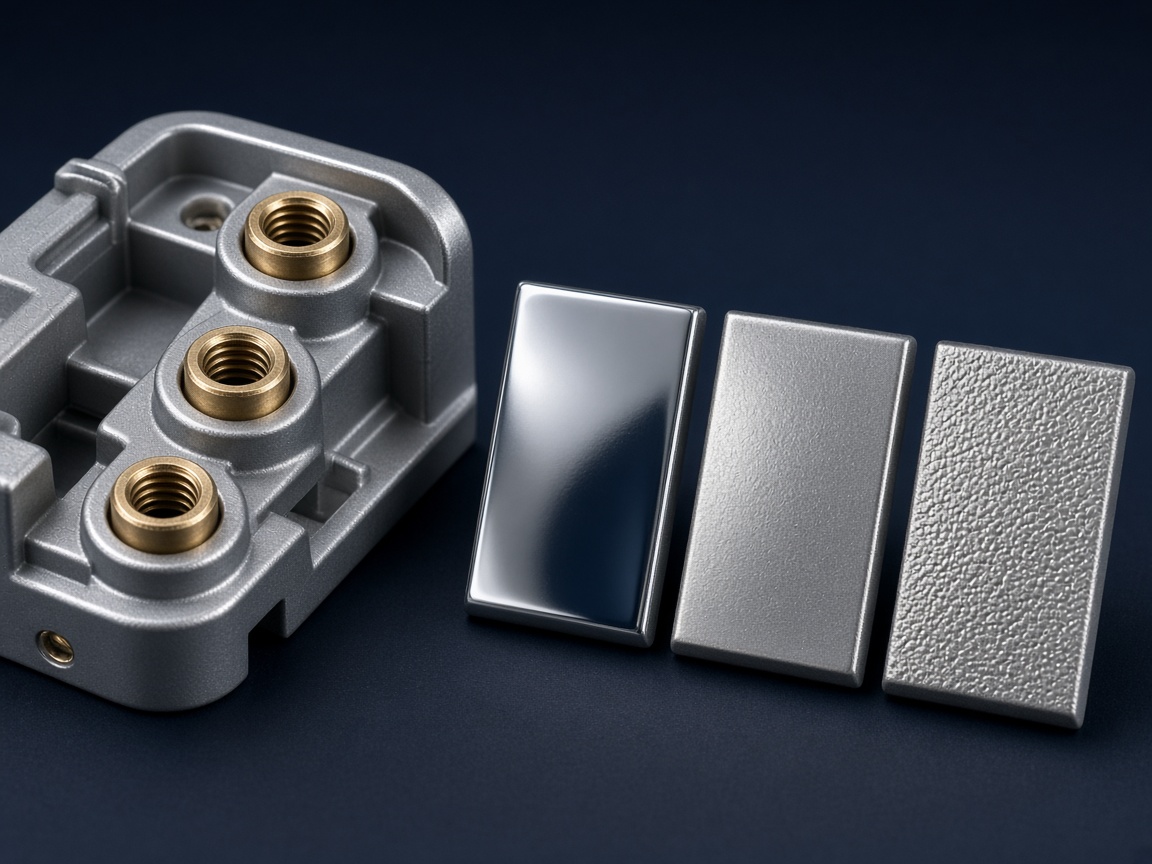
Write the family on the show face. Interior walls stay tool-finish unless you paid for them.
| Family | Shop talk | When we use it |
|---|---|---|
| A — diamond | High gloss. Hard, polishable steel. | Lenses, light pipes, a real show face. |
| B — paper | Semi-gloss. Common cosmetic. | Housings that should look finished, not mirrored. |
| C — stone | Matte. Hides flow a bit. | Functional covers. Less fingerprint talk. |
| D — blast | Satin to coarse. | Grip, hide knit, or a cheap even look. |
| As-machined | Cutter / EDM marks stay. | Default insides. Write nothing → this. |
All three can look like a housing. They are not interchangeable quotes.
| Situation | Honest pick | Not this |
|---|---|---|
| Frozen plastic housing at volume | Injection | Machining every piece from plate |
| Ten fit parts, geometry still moving | CNC plastic or print | Cutting steel you will recut next week |
| Soft second shot / grip | Overmold | Hoping paint feels like TPU |
| Metal insert in a plastic body | Insert mold (call it) | Pressing a nut into a thin boss later |
| Clear window + impact | PC, named | Clear-coating ABS and calling it a lens |
| One-off metal box | CNC milling | A plastic tool for a steel job |
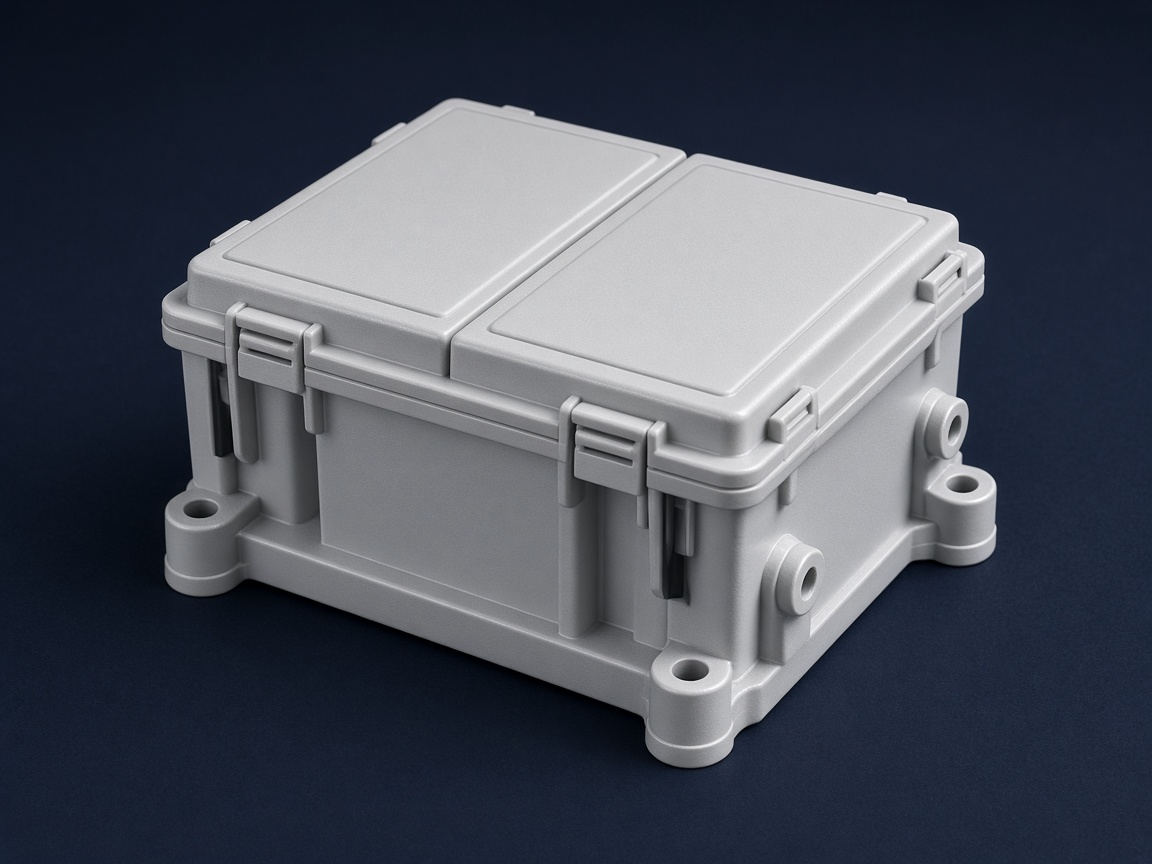
Two-shot clamshells, lids, and equipment skins. Snap and screw bosses written. Industrial-adjacent when the print is real — not a catalog claim.
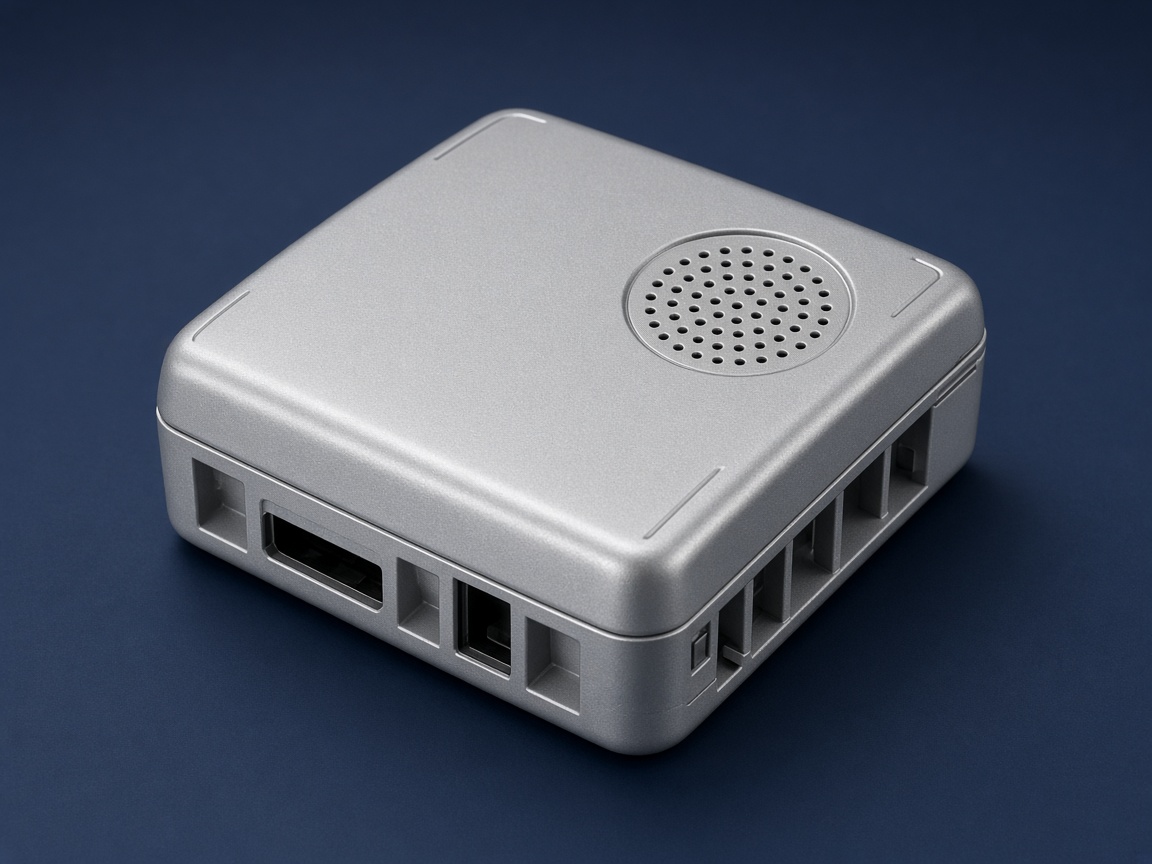
Handheld cases, port cutouts, and internal ribs. PC or ABS as named. UL or flame class only if you wrote it.
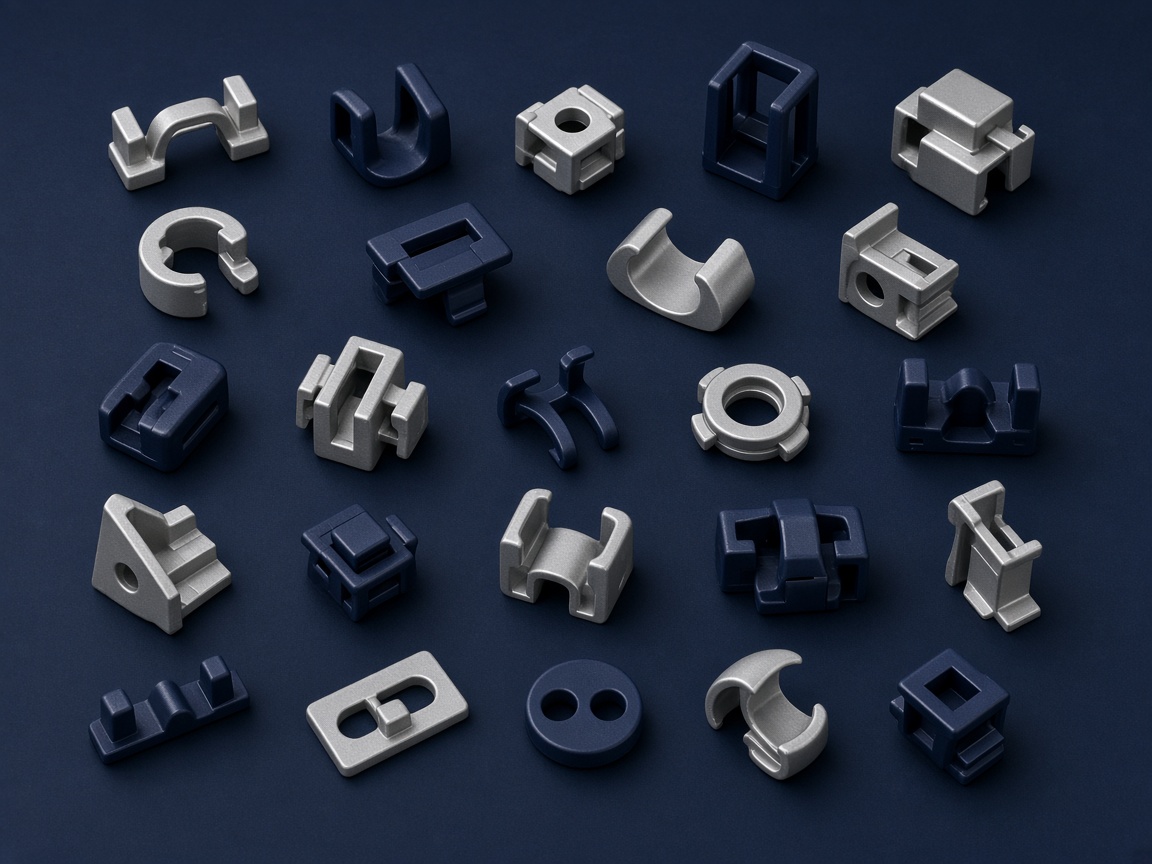
Cable ties that are not catalog, automotive-adjacent clips, and small acetal bits. POM or PA from the duty, not from a pretty photo.
Sink and warp are geometry, not luck. We will mark the risk. We will not promise a brick-thick logo on a 1.5 mm wall.
Thick-to-thin is a sink mark and a warp. Core out bosses. Ribs about half the wall — not a solid chunk behind a show face.
A fat logo, a tall boss, or a rib that matches the wall will read on the A-side. We will ask you to thin it or to hide that face.
Long flat lids and one-sided glass fill pull. Add ribs, a crown, or a different gate. We will not “just pack harder” a banana.
Write it. Texture wants more. Zero draft on a deep box is an ejector and polish fight.
Side actions and lifters are steel. A pass-through core is cheaper than a slider if the print allows it.
They leave a witness. Mark hide faces. We will not put a gate on a lens unless you drew it there.
We work to the band on your drawing. If you write nothing, we say which shop default we used — and we will still ask for a resin.
| General talk | ISO 2768-style medium on plastics when you write the class. Steel-safe on criticals until T1 lock. |
|---|---|
| Threads | Inserts as a standard (metric or UN). Molded threads only if you drew them and accept the draft. |
| Inspection | Balloons you marked on T1 and on the locked list. CMM / FAIR are line items. |
| Cosmetic | SPI or texture on show faces. Unmarked stay functional. |
| Files | Disk only — never emailed. |
STEP plus a PDF. Resin, yearly number, and SPI faces. Files stay on the Bluesky Tooling server and open only in the staff inbox.