Uploads stay on this server — never emailed

Machining by material

Plastic CNC machining

The cell that cuts named resin — not a mold shop and not a metal program with the density swapped. Bluesky Tooling mills and turns ABS, POM / Delrin, PC, nylon, PEEK, PTFE, and acrylic when you write them on the PDF. Soft stock. Heat and clamp decide the feed. The broader desk is CNC machining. Uploads stay on this server.

  • 3 / 4 / 5-axis mill + lathe
  • ABS / POM / PC / PA / PEEK first
  • Disk-only packs — never emailed
CNC-machined Delrin POM block — original Bluesky Tooling visual Upload your design

All uploads stay on this server — never emailed

What this desk actually runs

A prismatic box goes on a mill. A bushing goes on a lathe. A yearly number that pays for steel tooling belongs on injection molding — not hogged forever from plate.

3-axis pocket milling in Delrin plastic — original visual

Mill the prism

Pockets, thin walls, hole maps, and multi-face boxes in named resin. 3-axis first; 4-axis or 5-axis only when a second clamp would stack error. Soft faces chatter if you copy a metal program. CNC milling →

Housings, insulator plates, fixture nests.
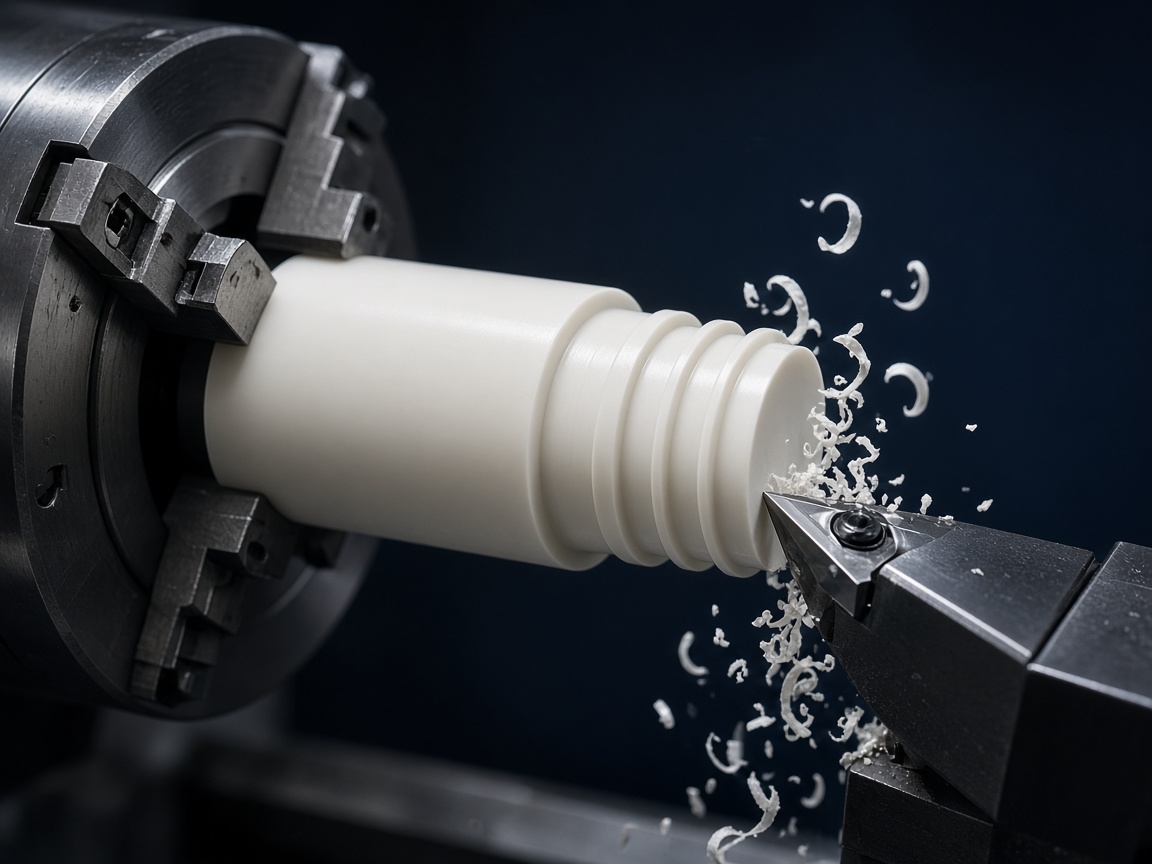
Turned POM bushing on a lathe — original visual

Turn the round

OD, ID, grooves, and threads on rod or chucked stock. Live-tool flats when a second mill setup would lie. PTFE and nylon smear if the insert is dull. CNC turning →

Bushings, rollers, standoffs, and collars.

Machined chips of ABS, POM, PC, nylon, PEEK, and PTFE — original visual

Named stock only

“Plastic” on a title block is not a spec. Write the resin. Grade chemistry lives on the material pages. We will not silently swap acetal for PEEK because a catalog called them cousins.

ABS, POM, PC, PA, PEEK, PTFE, acrylic.

Why machine resin instead of metal — or a tool

Plastic is not aluminum with a lighter density. The chip is different. The clamp is different. The mold desk is a different conversation.

No steel tool for a handful

Ten to a few hundred parts that still move stay on mill and turn. A cavity tool belongs on injection molding when the yearly number pays for it.

Insulating, not conducting

Most of these resins do not carry current. That is a reason to pick them for covers and standoffs — not a slogan we stamp on every housing.

Mass vs metal

A pocketed ABS or POM box is a fraction of the steel mass. It is not a silent 6061 swap. If the print wants metal, see aluminum machining.

Heat is the real limit

Soft stock melts before it chips if you copy a metal rpm. We drop the heat, not the balloons you wrote. Deep pockets still need a real tool.

Clamp, not crush

A vise that is honest on steel will dish a POM plate. Soft jaws, light hold, and a fixture that does not write a dent into the face.

Honest envelope

Quoted against the fixture. We do not advertise a next-morning ship we cannot keep.

Envelope we quote on plastic

Print wins. These are shop talk numbers — not a brochure claim of a metal tenth on every edge. Resin moves with heat and moisture.

Cells3-axis, 4-axis, 3+2, continuous 5-axis mills; conventional and live-tool lathes
Work envelopeStandard mills cover most housings and plates (about 800 × 500 × 400 mm). Larger asked on the quote.
Wall talkAbout 1.5 mm when the print and the height allow — not a promise on a tall soft rib
Linear talk±0.05 mm general on stable grades; tighter when ballooned and purchased. Nylon and PTFE will not hold a metal-style band without a talk.
As-machinedTypically Ra 3.2 μm unless a cosmetic or clear face is marked
Heat talkSlow rpm, sharp tools, air more often than flood. Melt and stress-whitening are the usual failure, not a dull flute.
ThreadsMetric or UN as a written standard. Soft resin strips if you copy a steel tap callout.
FilesSTEP, IGES, SLDPRT, DXF, PDF — disk only
LeadQuoted. We will not sell a one-day story we cannot keep

Mill vs turn on this resin

Pick the motion from the geometry. Plastic does not change that rule — it only changes the feed, the clamp, and the heat.

  1. CAD inA solid we can open plus a PDF with resin, qty, finish, and three balloons. Say plate, rod, or a molded blank.
  2. Pick the cellA box stays on milling. A bushing stays on turning. Mixed OD plus flats may be live-tool. A yearly cavity belongs on injection molding.
  3. CutNamed stock. Sharp tools. Thin walls and deep pockets get a different feed than a metal copy-paste. Soft jaws, not a steel crush.
  4. FinishDeburr, then the polish, blast, or paint you marked. Unmarked faces stay functional.
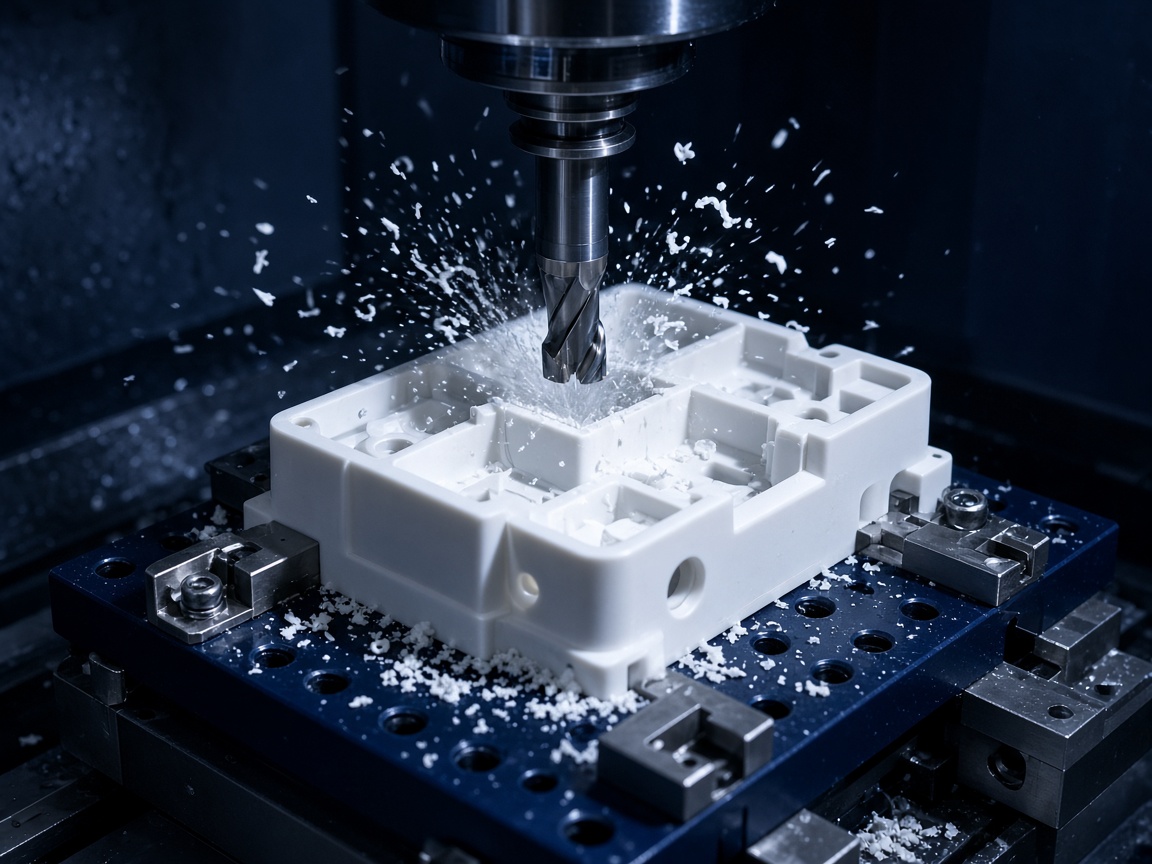
Delrin pocket cut on a 3-axis mill — original visual

Resins we cut — not the grade desk

Write the polymer. Chemistry, moisture talk, and the longer notes live on the material pages. This page only says what the spindle will do with them.

ABS

Everyday proto housings. Tough, paints clean, machines if you keep the heat down. First pick for covers that still move. ABS →

POM / Delrin

Stable, slick, clean chips. Gears, bushings, and wear strips. We will not swap it onto a PEEK quote. Delrin (POM) →

PC

Clear and tough. Slow feeds or the face smears. Polish is extra on show faces. Polycarbonate →

PA / nylon

Wear and snap-fit talk. Dry or conditioned — write which. Moisture moves the size after the cut. Nylon →

PEEK

High-temp, dear, not an acetal cousin. We cut it when the PDF names it. PEEK →

PTFE & acrylic

PTFE is soft and cold-flows — turn more than mill. Acrylic is clear when you buy the polish. PTFE → · Acrylic →

Resin talk at the spindle

Shop notes so you can pick a starting polymer. A cert is a purchased line. These are not a promise on your lot.

ABSPOM / DelrinPCPA / nylon
Shop roleProto housingWear / bushingClear / impactWear + snap
Chip talkKeep heat downClean, stableSmears if rushedStringy; dry or wet
Size talkFine for protoBest of this setOK if cooledMoves with moisture
Watch-outMelt / paint laterNot a PEEK swapStress-whiteningCondition after cut
Silent swap?NoNoNoNo

PEEK, PTFE, and acrylic sit on the same mill. PEEK is heat and cost. PTFE is clamp and cold-flow. Acrylic is polish, not a free clear face.

Surface finishing after the cut

Unmarked faces stay functional. Cosmetic and clear faces must be drawn. Soft media only — a steel blast recipe will frost the part.

As-machined

Default. Tool marks stay. Typical Ra 3.2 μm talk.

Bead blast

Soft media only, and only when asked. See bead blasting.

Polish

Clear acrylic or PC faces you marked. Vapor talk is a line item. See polishing.

Brush

Satin on show faces only. Soft stock scratches easy. See brushing.

Paint

ABS first. A coat is thickness — not assumed on POM or PTFE.

Laser mark

Serials when written — after paint if paint would hide them. See laser engraving.

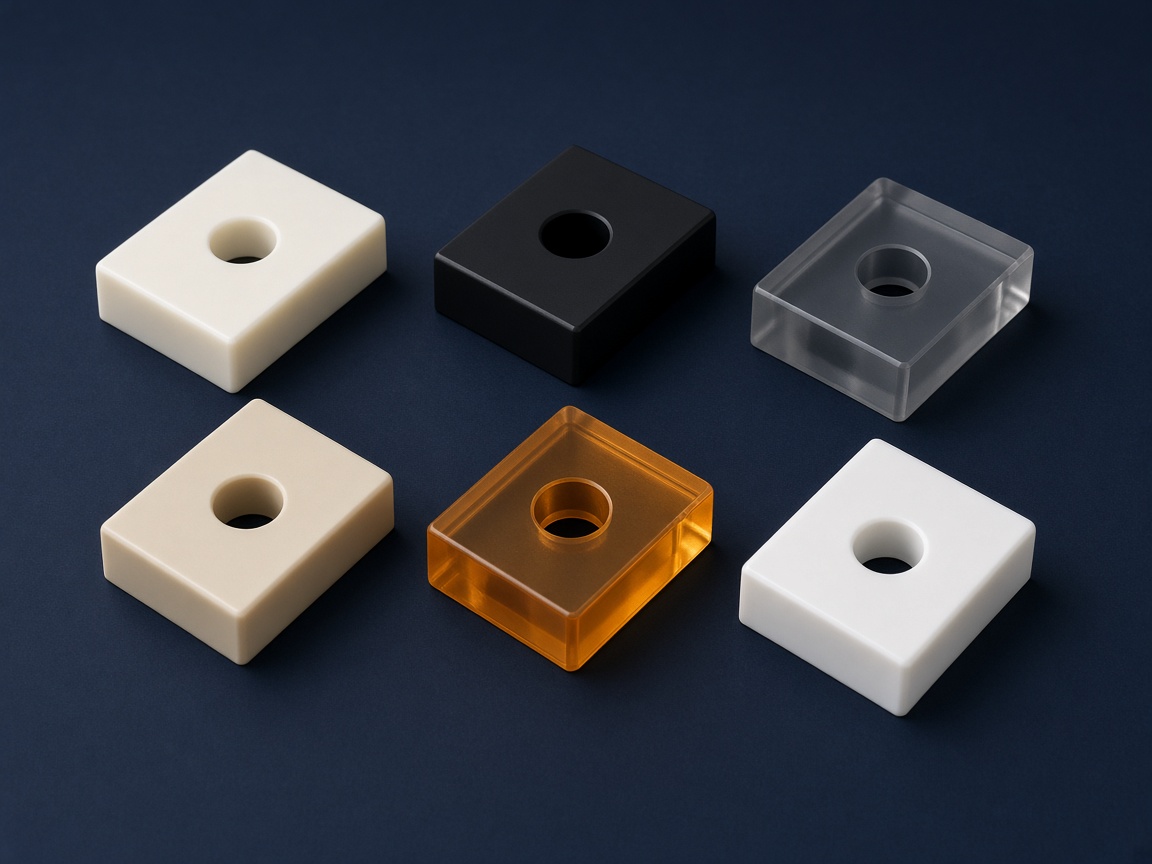
Named plastic coupons after machining — original visual

Machine vs injection on this desk

Same resin family, different economics. We will say when the print actually wants a cavity — or a metal cell.

SituationHonest pickNot this
Few to a few hundred, geometry still movingPlastic CNC machiningBuying a steel tool for a handful
Yearly number that pays for a cavityInjection moldingHogging the same housing from plate forever
Light metal housing, anodize afterAluminum machiningCalling ABS “aluminum-ish”
Insulator, bushing, or proto coverNamed resin on this cellA default metal swap for looks
Clear window or lens protoAcrylic or PC + written polishAs-machined and hoping it looks optical
High heat or chemical that acetal cannot holdPEEK when writtenA silent POM upgrade

Where machined plastic shows up

We cut what the print names. Industry labels do not change the balloons.

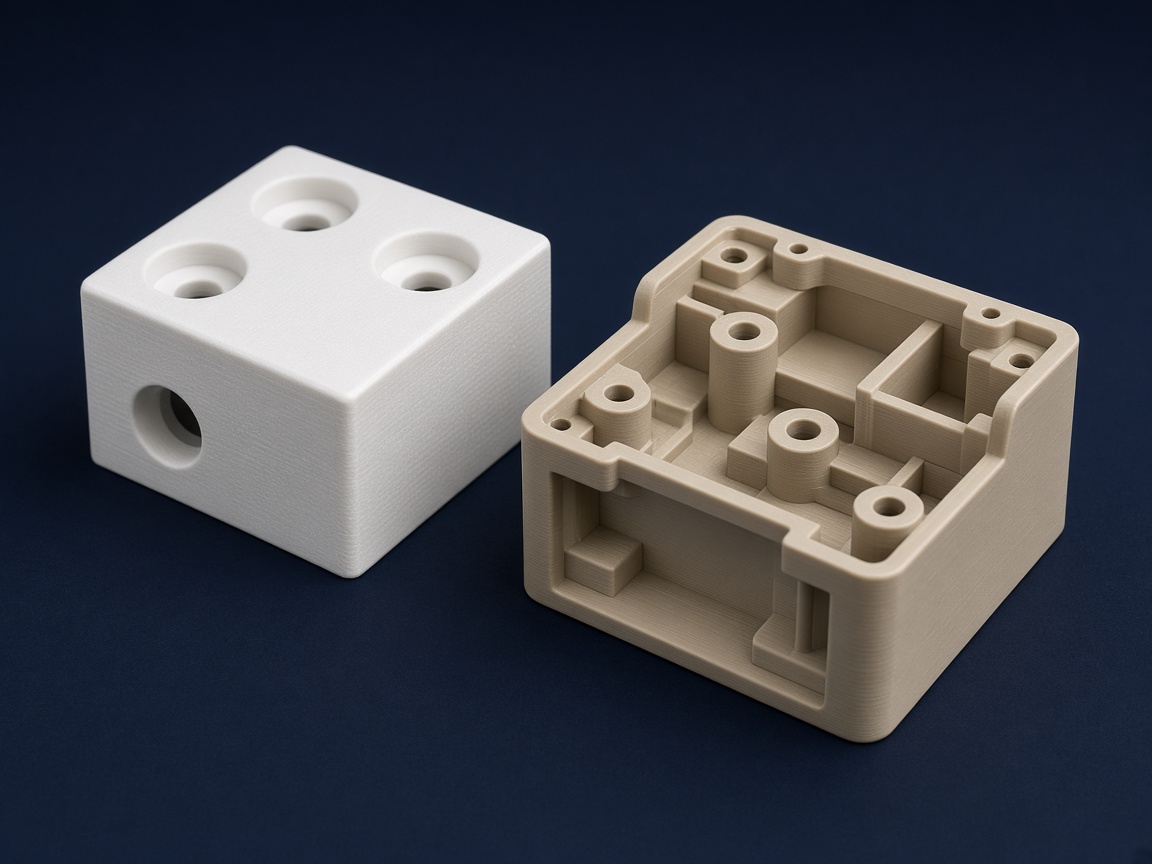
Machined plastic insulator and prototype housing — original visual

Insulators & electronics

Standoffs, barrier plates, and proto covers when the resin is named for insulation. Not a slogan on every enclosure.

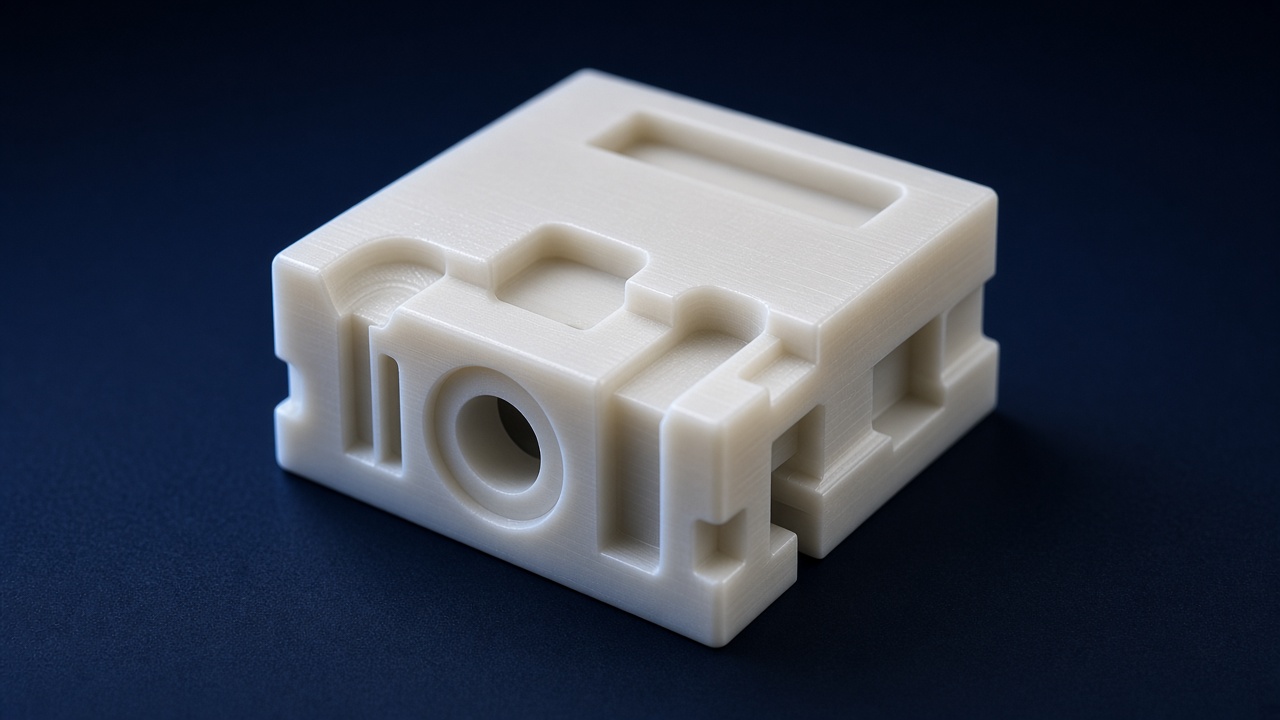
Milled Delrin block for industrial use — original visual

Housings & industrial

ABS and POM covers, fixture nests, and automotive-adjacent interiors. A 5-axis cell only when the print is real — not as theater.

Turned plastic bushing and collar — original visual

Gears, bushings & medical covers

POM and nylon first for wear. Medical-adjacent housings when you buy the named resin and the inspection.

DFM notes before you upload

Plastic is easy to cut. It is still easy to write a print the cutter cannot keep — and easy to melt or dish if you treat it like metal.

Clamp, do not crush

Soft jaws and a light hold. A steel-style vise will dish a POM plate and leave a witness you did not draw. Say if a face is cosmetic.

Heat, not just rpm

Resin melts before the flute dulls. We drop speed, keep the tool sharp, and often run air. Deep pockets pack chips and then weld.

Thin walls

1.5 mm is talk, not a promise on a tall rib. Soft stock chatters. Copying a 0.8 mm metal wall onto ABS is how a part rings.

Inside corners

A cutter has a radius. Sharp internal corners are a relief or a second process — even in Delrin.

Moisture and rest

Nylon moves after the cut if you do not say dry or conditioned. PTFE cold-flows under clamp. Measure when the shop and the part agree.

Machine vs mold

Say which blank you already have. We will not quote a cavity on this page, and we will not hog a production housing from plate if injection molding is cheaper.

How to order machined plastic

No account. Files stay on this server and open only in the staff inbox.

1

Get a factory quote

Upload the pack on Get a Quote. Name the resin and the finish. Nothing is mailed.

2

Start production

After you confirm. We will say if a mill, a lathe, or a mold tool is the honest pick.

3

Receive the part

Inspected to the balloons you bought, packed to the quote address.

FAQ

Machine until the yearly number pays for a tool. A cavity plus a production lot belongs on injection molding. Say which blank you already have.
ABS for proto housings. POM / Delrin for wear and size. PC or acrylic when you need clear and will buy polish. Nylon when you accept moisture talk. PEEK only when the heat or chemistry is real. PTFE when the print is soft and slippery. We will not swap in silence.
A box, pocket, or housing goes to CNC milling. A bushing, roller, or collar goes to CNC turning. Mixed OD plus flats may stay in one chuck.
On stable grades, ballooned and purchased, yes in places. Nylon and PTFE will not hold a metal-style band without a talk. Heat and moisture move the size after the cut.
Aluminum is lighter than steel and anodizes. Plastic is insulating, often cheaper for a handful, and a different feed. We will say when the print actually wants aluminum machining.
No. The pack lands in uploads/quotes and opens only in the admin inbox.

Send the plastic pack

STEP plus a PDF. Name the resin. Files stay on the Bluesky Tooling server and open only in the staff inbox.

Get a Quote