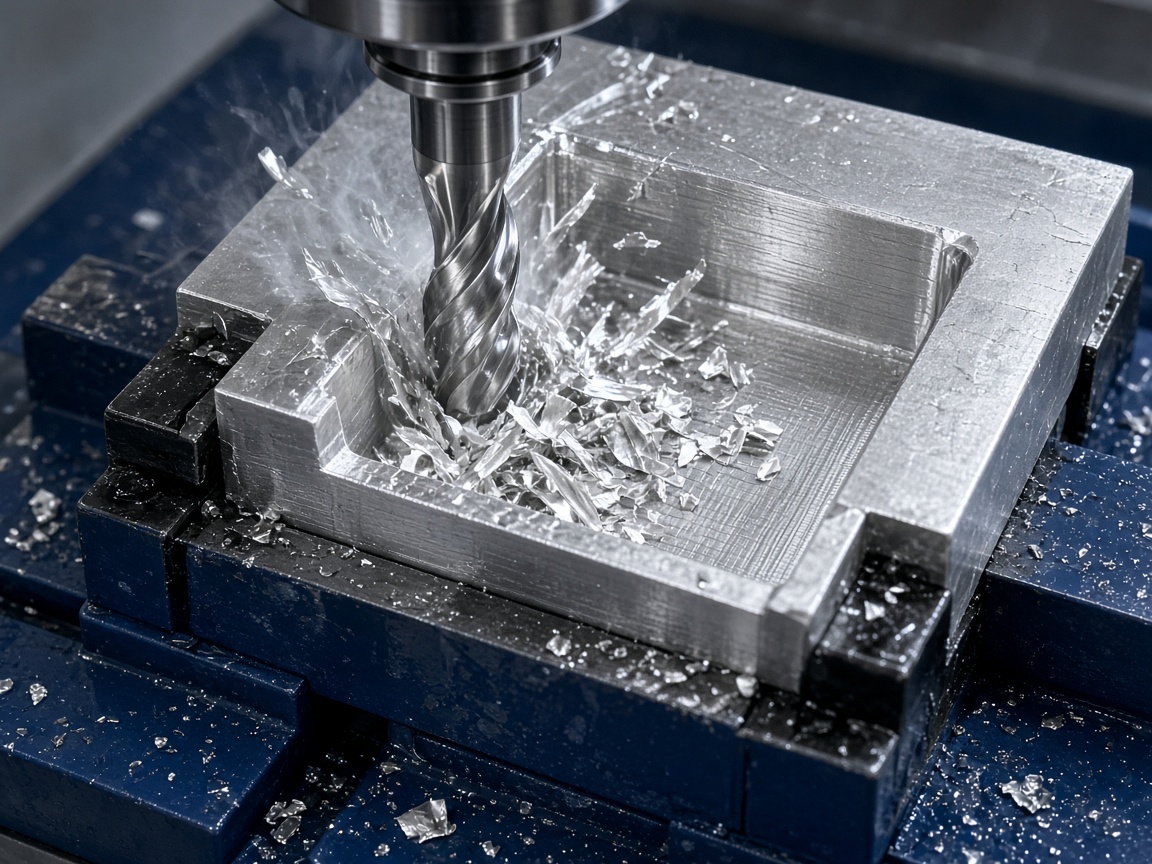
Mill the prism
Pockets, thin walls, hole maps, and multi-face boxes. 3-axis first; 4-axis or 5-axis only when a second clamp would stack error. CNC milling →
Housings, heat-sink plates, fixture nests.

Machining by material
The cell that cuts aluminum — not the grade catalog. Bluesky Tooling mills and turns 6061 and 7075 first, then 2024 and the other alloys you write on the PDF. Chips leave faster than steel. Anodize happens after the cut when you mark the class. Grade chemistry lives on materials / aluminum. Uploads stay on this server.
A prismatic box goes on a mill. A shaft goes on a lathe. The oxide coat is a second process — after the tool marks, not instead of them.
Pockets, thin walls, hole maps, and multi-face boxes. 3-axis first; 4-axis or 5-axis only when a second clamp would stack error. CNC milling →
Housings, heat-sink plates, fixture nests.
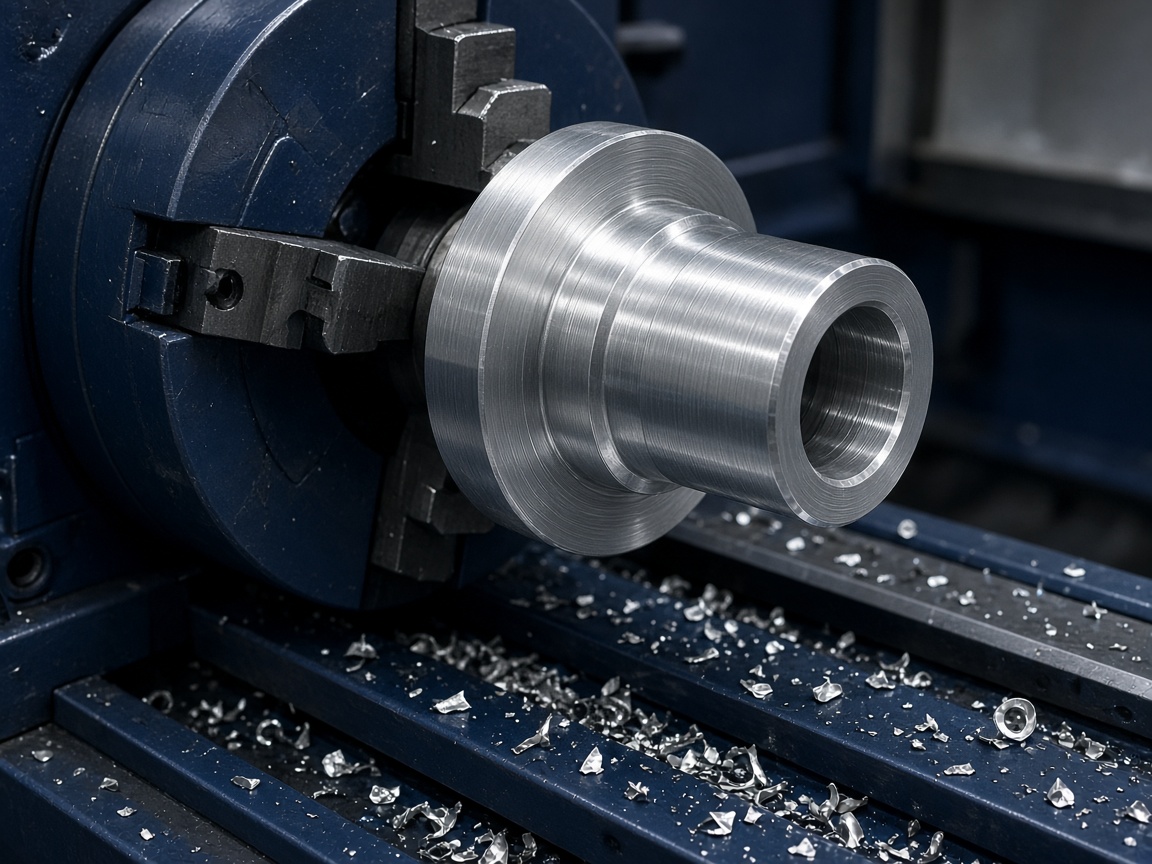
OD, ID, grooves, and threads on bar or chucked stock. Live-tool flats when a second mill setup would lie. CNC turning →
Collars, bosses, pins, and fittings.
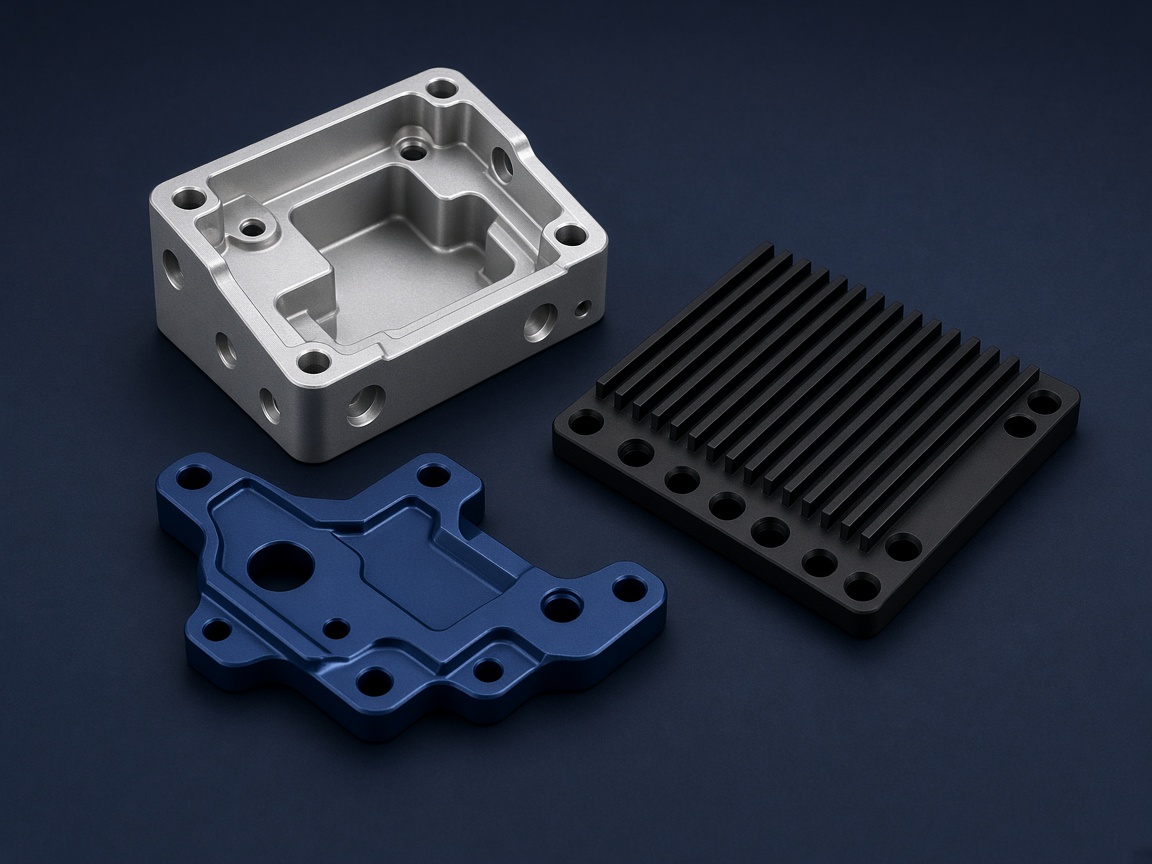
Type II or Type III only when the PDF names the class. Dye is a range, not a Pantone. Film is thickness — fits change. Anodizing →
Unmarked faces stay functional.
We do not copy a 45# toolpath onto 6061 and call it done. The feed is faster. The clamp still has to be honest.
Aluminum leaves the spindle quicker than carbon steel or stainless. That shortens cycle time. It does not invent a one-day promise, and it does not skip the balloons you wrote.
A pocketed 6061 box is a fraction of the steel mass. 7075 closes more of the strength gap. We will not silently swap grades because a catalog called them cousins.
A stable film forms on the cut. That is not a hardcoat. Wet or marine-adjacent work still wants a written finish — especially on copper-bearing 2024.
It moves heat. It carries current. Heat-sink plates and bus-adjacent bits belong here when you write that — not as a slogan on every cover.
Soft faces smear if you treat them like steel. We change the feed, not the title block. Deep pockets still need a real tool, not a brochure claim.
Quoted against the fixture. We do not advertise a next-morning ship we cannot keep.
Print wins. These are shop talk numbers — not a brochure claim of a tenth on every edge.
| Cells | 3-axis, 4-axis, 3+2, continuous 5-axis mills; conventional and live-tool lathes |
|---|---|
| Work envelope | Standard mills cover most housings and plates (about 800 × 500 × 400 mm). Larger asked on the quote. |
| Wall talk | About 0.8 mm when the print and the height allow — not a promise on a 200 mm tall rib |
| Linear talk | ±0.05 mm general; tighter when ballooned and purchased |
| As-machined | Typically Ra 3.2 μm unless a cosmetic face is marked |
| Anodize talk | Type II / III and dye as a line item. Growth is thickness — mask threads if they cannot take it |
| Threads | Metric or UN as a written standard. “Tap here” is not a spec |
| Files | STEP, IGES, SLDPRT, DXF, PDF — disk only |
| Lead | Quoted. We will not sell a one-day story we cannot keep |
Pick the motion from the geometry. Aluminum does not change that rule — it only changes the feed.
Write the alloy and the temper. “Aluminum” on a title block is not a spec. Chemistry, density, and the longer grade table live on materials / aluminum. This page only says what the spindle will do with them.
Shop notes so you can pick a starting alloy. A mill cert is a purchased line. These are not a promise on your lot.
| 6061-T6 | 7075-T6 | 2024 | |
|---|---|---|---|
| Shop role | General housing / plate | Strength first | Fatigue talk |
| Chip talk | Fast, clean | Fast, harder | Fine — write the temper |
| Anodize | Clean Type II / III | OK — dye varies | Coat anyway |
| Watch-out | Soft vs a steel program | SCC / do not weld | Corrosion without a coat |
| Silent swap? | No | No | No |
Unmarked faces stay functional. Cosmetic faces must be drawn. Anodize is the usual aluminum coat — not a free cosmetic on every face.
Default. Tool marks stay. Typical Ra 3.2 μm talk.
Even matte before anodize, or as a look of its own.
Type II / III. Color is a range. See anodizing.
After hardware rules are clear. Film is thickness.
Serials and logos when written — after the coat if the coat would hide them.
Nickel or other only when asked. Aluminum is not a zinc-plate page.
Same mill, different feed. We will say when the print actually wants another alloy.
| Situation | Honest pick | Not this |
|---|---|---|
| Light housing, fast chips, anodize after | Aluminum machining | Copying a steel program |
| Wear, weldment, or heat-treat first | Steel / alloy steel | Up-gauging 6061 in silence |
| Wet, food, or marine-adjacent | Stainless — or aluminum plus a written coat | Bare 2024 in a wet shop |
| Same mass, much more heat in the cut | Titanium when the print is real | A default swap for 7075 |
| Soft zinc alloy, not a plate on steel | Zinc machining | Calling Zamak “aluminum-ish” |
| Conductive fitting, easy chip | Brass / copper | Hogging a bus from 6061 for looks |
We cut what the print names. Industry labels do not change the balloons.
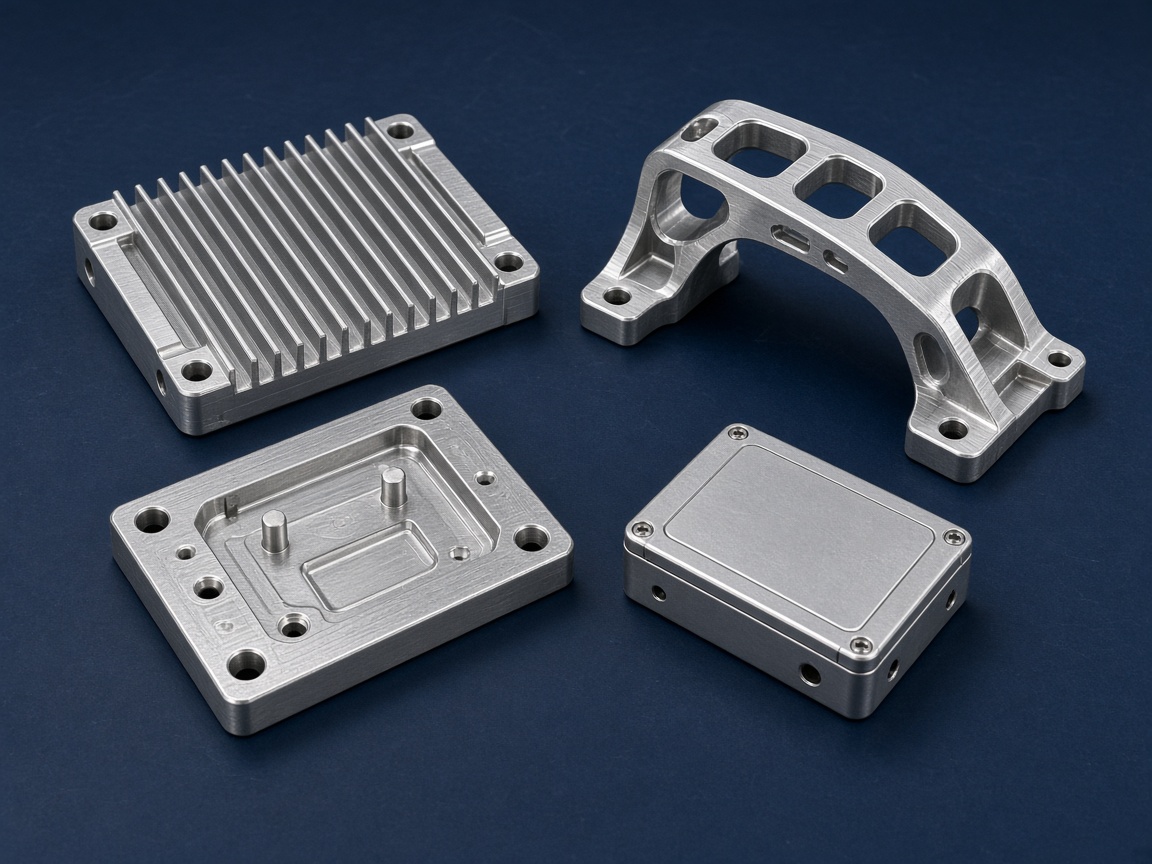
Heat-sink plates, enclosures, and repeating nests. The nest is the product when the datum must come back the same.
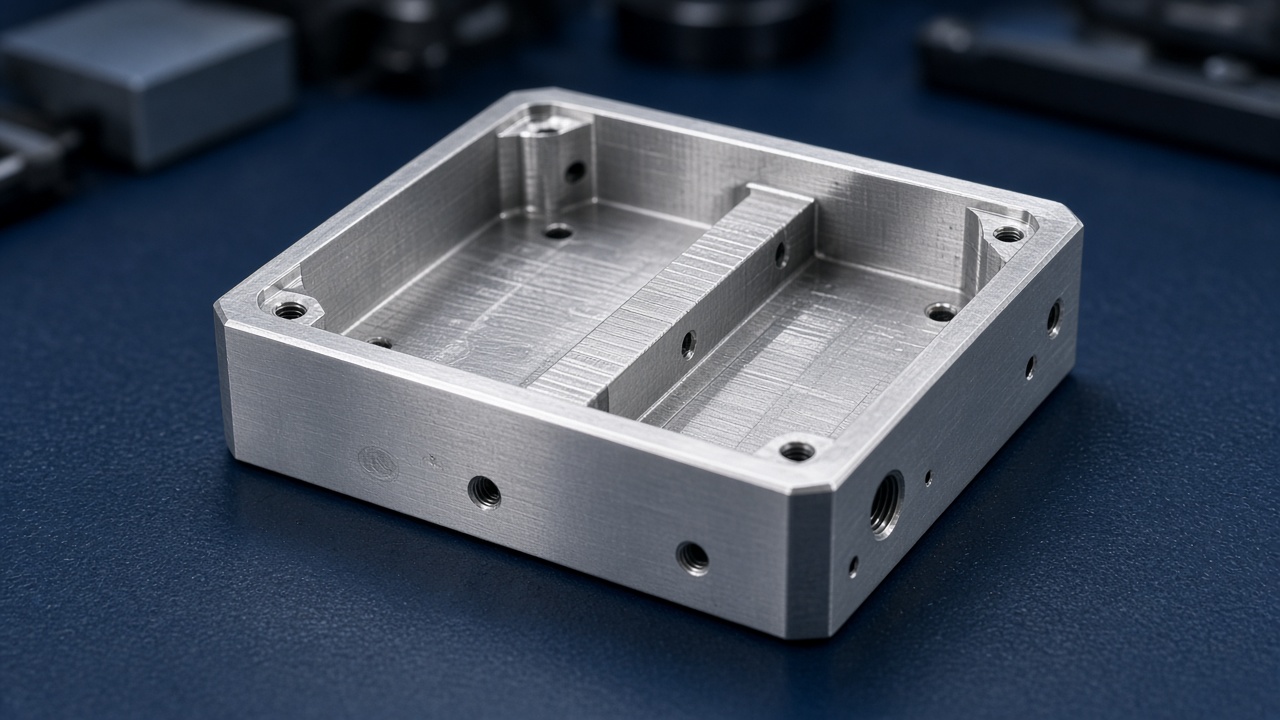
Pump covers, gearbox plates, and automotive-adjacent brackets. A 5-axis cell only when the print is real — not as theater.
Turned collars and bosses. Medical-adjacent covers when you buy the inspection and the traceable stock.
Aluminum is easy to cut. It is still easy to write a print the cutter cannot keep.
A cutter has a radius. Sharp internal corners are an EDM conversation or a relief — even in 6061.
0.8 mm is talk, not a promise on a tall rib. Soft stock chatters if you copy a steel wall.
Past about 4× width we will talk a longer tool, a split, or a second setup. Chip packing is the usual failure.
Film is thickness. Fits, threads, and seal lands must be marked for mask or for a post-coat size.
Do not leave the grade blank and hope. We will not swap 7075 onto a 6061 quote because someone wanted more strength later.
A tight-bend 5052 bracket is not a milled 6061 plate. Say which blank you already have.
No account. Files stay on this server and open only in the staff inbox.
Upload the pack on Get a Quote. Name the grade and the finish. Nothing is mailed.
After you confirm. We will say if a mill, a lathe, or a steel swap is the honest pick.
Inspected to the balloons you bought, packed to the quote address.
STEP plus a PDF. Name the grade. Files stay on the Bluesky Tooling server and open only in the staff inbox.